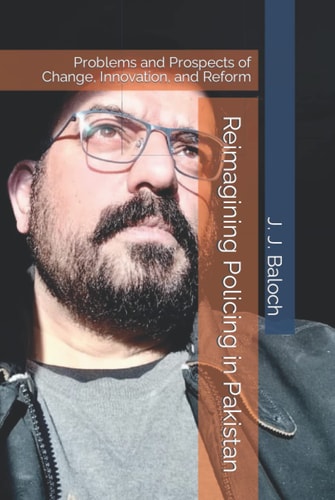
Reimagining Policing in Pakistan: Problems and Prospects of Change, Innovation, and Reform
0
0
As an Amazon Associate and affiliate partner, Menrva Books earns from qualifying purchases. Learn more
Author Description
Worldwide, police departments undergo drastic transformations. The challenges of terrorism, democracy, technology, innovation, social media, and the rule of law emphasise reimagining the values, models, approaches, and strategies of policing for dealing with crime, disorder, and violence in society. The leading concern of democratic nations is to explore the ways and means of balancing police authority with civil liberty and crime control with justice. Despite the importance of this conversation, no significant effort has been made to contextualise the discourse in response to postmodern developments in both societies to police. This book embarks upon finding the answer to the following question: Why and how transforming police for the government into police for the people has become an important goal and existential challenge for struggling democracy in Pakistan? To address the above question, this book utilises a combination of research methods such as case studies, primary and secondary data analysis, and participant observation. The research methodology will be doctrinal with the inductive reasoning method following the Harvard referencing pattern. It discusses the ideals, principles, and structures of police organisations in Pakistan as a case study. To explore and frame this project theoretically, this book engages with a contemporary policing scholarship to evaluate the challenges and opportunities of transforming policing in Pakistan. The discourse brings forth new and emerging global scholarship and research on policing in the under-researched policing context of Pakistan. The primary purpose is to explore the various facets of policing in Pakistan academically. In the wake of the global war on terrorism, the subject of policing has gained much importance and received significant attention since 2001. Police organisations have struggled to reform and evolve alongside advancements in technology, organised crime, and rapidly c
Menrva's Summary
THE THESIS
This book investigates the complex challenges and prospects of transforming Pakistan's police force from an instrument of the state into one that serves its people. The author, J. J. Baloch, addresses the global context of police reform driven by terrorism, technological advancements, and the demands of democracy, highlighting the critical need to balance authority with civil liberty and crime control with justice. Utilizing a mixed-methods approach including case studies, primary and secondary data analysis, and participant observation, the book examines the ideals, principles, and structures of Pakistani police organizations. It engages with contemporary policing scholarship to evaluate the opportunities and obstacles in reforming policing within Pakistan's under-researched context, particularly in the wake of global security concerns since 2001.**
THE SCOPE MAP
- Analysis of the historical and structural ideals, principles, and organizations of police in Pakistan.
- Engagement with contemporary policing scholarship to frame theoretical approaches to reform.
- Examination of the impact of global challenges such as terrorism, technology, and social media on policing.
- Exploration of the balance between police authority and civil liberties in a democratic framework.
- Case studies and data analysis to understand the specific context of policing in Pakistan.
- Discussion of the transition from a 'police for the government' to a 'police for the people' model.
- Consideration of innovation and reform strategies in response to crime, disorder, and violence.
THE AUTHORITY PERSPECTIVE
The book frames its analysis within the global discourse on police transformation, emphasizing the unique challenges faced by Pakistan's struggling democracy. It aims to contribute new scholarship to the under-researched area of policing in Pakistan, particularly in the post-2001 era shaped by the war on terror. The methodology, combining doctrinal research with inductive reasoning and empirical data, suggests a rigorous academic approach. The work is positioned to offer insights into the critical need for police reform to align with societal expectations and democratic principles.
Page Count:
284
Publication Date:
2022-02-27
Publisher:
Independently published
ISBN-13:
9798424085581
Non-Fiction
Politics
History
Sociology
Criminology
Law Enforcement
Community Tags
Similar Books