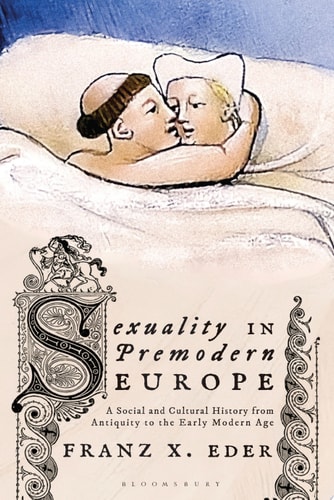
Sexuality in Premodern Europe: A Social and Cultural History from Antiquity to the Early Modern Age
0
0
As an Amazon Associate and affiliate partner, Menrva Books earns from qualifying purchases. Learn more
Author Description
How did sexual relationships work before, in and outside of marriage in the pre-modern era? What problems did contraception and sexually transmitted diseases pose? How did people deal with prostitution and pornography back then? What were the possibilities for same-sex and queer desire and practice? Using numerous examples and sources from across the continent, Sexuality in Premodern Europe shows that even in earlier centuries, sexual life had an elementary significance for the coexistence of couples and communities. It was just as decisive for how individuals saw themselves and others as it was for maintaining the social, economic and political order. Franz X. Eder interestingly emphasises the socio-historical view of sexuality, offering an apt foil for the cultural perspective which is so prevalent in the field. In this book, sexual behaviour is understood and thought about as social practice. From this vantage point, Eder deals with the function of the sexual in upbringing and socialization, its significance for the image of men and women, its role in marriage initiation, and the importance of sexual life for marital relationships and concubinage. Deviant and discriminated sexual forms such as prostitution, pornography and same-sex acts are also addressed throughout. The book explores the ways in which many people gained sexual experiences before, besides or beyond marriage, even if these experiences were forbidden in former societies. While research into the history of sexuality has so far dealt with such forms of the sexual primarily from the point of view of regulation and sanctioning, here they are understood as 'positive' practices that allowed people to understand and take ownership of their sexual desire.
Menrva's Summary
THE THESIS
This book investigates the multifaceted nature of sexual relationships and practices in pre-modern Europe, from antiquity to the early modern age. Franz X. Eder examines how sexual life, both within and outside of marriage, significantly shaped social, economic, and political orders, as well as individual self-perception. The work draws on numerous examples and sources from across the continent to analyze the functions of sexuality in socialization, its role in shaping gender images, its importance in marriage and concubinage, and the challenges posed by contraception and sexually transmitted diseases. Eder uniquely frames deviant sexual practices like prostitution, pornography, and same-sex acts not merely as subjects of regulation, but as 'positive' practices through which individuals understood and asserted their sexual desires.
THE SCOPE MAP
- The functioning of sexual relationships within and outside of marriage in pre-modern Europe.
- The impact of contraception and sexually transmitted diseases on society.
- Historical approaches to prostitution and pornography.
- The possibilities and practices of same-sex and queer desire.
- The role of sexuality in individual self-perception and social order.
- Sexuality's significance in upbringing, socialization, and marital relationships.
- An analysis of sexual behavior as a social practice, moving beyond regulation and sanctioning.
THE AUTHORITY PERSPECTIVE
The book is presented as a significant contribution to the socio-historical study of sexuality, offering a cultural perspective that complements prevailing regulatory and sanctioning viewpoints. It emphasizes understanding sexual behavior as a social practice, highlighting its fundamental role in societal cohesion and individual identity formation across various historical periods. The work is noted for its extensive use of diverse examples and sources, providing a comprehensive overview of sexual life in pre-modern Europe. By framing even forbidden practices as 'positive' avenues for sexual self-understanding, Eder offers a nuanced approach to the history of desire and its social implications.
Page Count:
520
Publication Date:
2023-10-19
Publisher:
Bloomsbury Publishing
ISBN-10:
1350341088
ISBN-13:
9781350341081
Non-Fiction
History
European History
Social History
Sexuality Studies
Community Tags
Similar Books