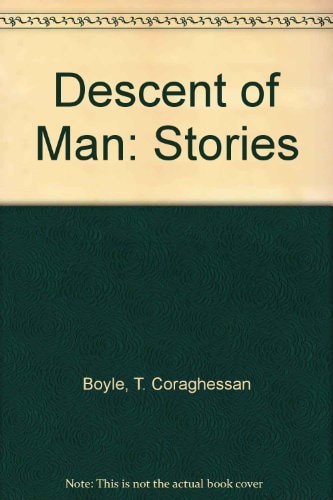
Descent of Man: Stories
0
0
As an Amazon Associate and affiliate partner, Menrva Books earns from qualifying purchases. Learn more
Author Description
In The Origin of Species (1859), Charles Darwin refused to discuss human evolution, believing the subject to be 'surrounded with prejudices'. He had been reworking his notes since the 1830s, but only with trepidation did he finally publish The Descent of Man in 1871. The book notoriously put apes in our family tree and made the races one family, diversified by 'sexual selection' - Darwin's provocative theory that female choice among competing males leads to diverging racial characteristics. Named by Sigmund Freud as 'one of the ten most significant books' ever written, Darwin's Descent of Man continues to shape the way we think about what it is that makes us uniquely human.
Menrva's Summary
THE PULSE
T. Coraghessan Boyle explores the intersection of human instinct, scientific ambition, and social absurdity through a collection of narratives that challenge the boundaries of conventional behavior. The protagonists in these stories often find themselves caught in the friction between their primal urges and the rigid expectations of modern society. Boyle utilizes a variety of narrative frameworks, ranging from dark humor to speculative scenarios, to examine how individuals navigate the consequences of their own desires and intellectual pursuits. The world-building is grounded in recognizable reality, yet it is frequently tilted by the author's penchant for extreme situations and ironic outcomes.
INSIDE THE PAGES
- Satirical examination of scientific and cultural obsession
- Use of dark, biting humor to highlight human fallibility
- Diverse settings ranging from domestic spaces to experimental laboratories
- Focus on the tension between biological drives and social norms
- Stylistic experimentation with tone and perspective
- Exploration of the consequences of unchecked ambition
- Integration of historical and scientific themes into fictional narratives
- Sharp, observational prose that emphasizes character flaws
THE COLLECTIVE ECHO
Readers and critics frequently note the author's ability to blend intellectual curiosity with a cynical, often humorous, view of human nature. Discussion often centers on the collection's stylistic variety and the way Boyle manages to maintain a consistent tone of irony across disparate subjects. Many highlight the effectiveness of his character studies, which often focus on individuals pushed to the brink by their own obsessions. The work is widely regarded as a significant example of late 20th-century American short fiction that prioritizes wit and thematic depth over traditional plot structures.
Page Count:
219
Publication Date:
1980-01-01
Publisher:
McGraw-Hill
ISBN-10:
0070069565
ISBN-13:
9780070069565
Literary Fiction
Contemporary
Satire
Short Stories
Literary
Community Tags
Similar Books