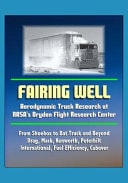
Fairing Well: Aerodynamic Truck Research at NASA's Dryden Flight Research Center - From Shoebox to Bat Truck and Beyond
0
0
As an Amazon Associate and affiliate partner, Menrva Books earns from qualifying purchases. Learn more
Author Description
This NASA report reviews research conducted by NASA on the aerodynamic efficiency of long-haul trucks. It may seem to be only a matter of fuel prices, drag coefficients, and vehicle modifications, but a nuanced examination of the subject reveals cultural influences on a technological development that might otherwise appear logical and straightforward. There are two principal objectives to this monograph. The first is to bring long overdue attention to research done at NASA Dryden on truck aerodynamics, work not usually associated with the agency but results from which had and continue to have a direct benefit to the U.S. economy. The second is to use this case as on opportunity to tease apart some of the strands of the social fabric in technology's construction and adaptation, something not regularly done with NASA's technical work. If we genuinely seek to understand ourselves, we can ill afford superficial attention to technological choices we - or others-make regarding its use, rejection, adoption, or adaptation. It's important to know who makes what decisions: the results can be surprising. A reflection on NASA's interest in aerodynamically efficient trucks turns out to be more than just an account of fairings and base drag and surface roughness. This history is also about technological choices, cultural values, and how Americans define themselves. And since technology is a reflection of human choices and values this comes as no real surprise. While regularly riding his bicycle from his home in North Edwards to the NASA Flight Research Center (today's Dryden Flight Research Center) on Edwards Air Force Base, Edwin J. "Ed" Saltzman noticed the push and pull of tractor-trailers as they passed him. Saltzman's route took him along a section of Highway 58 in Southern California's High Desert before veering off toward the base. The Dryden Flight Research Center is one of several tenants of the U. S. Air Force at Edwards. Highway 58 was, and is frequented by trucks comi
Menrva's Summary
THE THESIS
This report investigates the intersection of aerodynamic research on long-haul trucks with the cultural and social factors influencing technological adoption in the United States. The monograph aims to highlight the often-overlooked research conducted at NASA's Dryden Flight Research Center on truck aerodynamics, emphasizing its direct benefit to the U.S. economy. Furthermore, it uses this case study to explore the social fabric of technology's construction and adaptation, arguing that understanding our technological choices requires examining the cultural values and decision-making processes involved. The work posits that technology is a reflection of human choices and values, and a deep dive into NASA's interest in aerodynamically efficient trucks reveals more than just technical details, but also insights into American identity and decision-making.
THE SCOPE MAP
- A review of aerodynamic research on long-haul trucks conducted at NASA's Dryden Flight Research Center.
- An examination of the cultural and social influences on the development and adoption of truck aerodynamics.
- Analysis of the economic benefits of aerodynamic research for the U.S. economy.
- Exploration of the decision-making processes behind technological choices in transportation.
- Case studies and historical accounts of truck design and modification for fuel efficiency.
- Discussion on how technological choices reflect societal values and self-definition.
THE AUTHORITY PERSPECTIVE
This report is presented as a historical and sociological examination of a specific area of engineering research. The authority perspective suggests it is intended for readers interested in the history of technology, engineering case studies, and the sociology of innovation. It aims to provide a nuanced understanding of how cultural factors interact with logical technical development, offering insights into decision-making processes that might otherwise be overlooked. The work positions itself as a reflection on American technological choices and values, using the example of truck aerodynamics to illustrate broader themes.
Page Count:
173
Publication Date:
2017-05-06
Publisher:
Amazon Digital Services LLC - KDP Print US
ISBN-10:
1521236305
ISBN-13:
9781521236307
Non-Fiction
History
Transportation
Engineering
Aerodynamics
Sociology of Technology
Community Tags
Similar Books







Reader Comments
Share Your Thoughts
No comments yet. Be the first to share your thoughts!