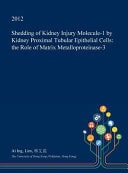
Shedding of Kidney Injury Molecule-1 by Kidney Proximal Tubular Epithelial Cells: The Role of Matrix Metalloproteinase-3
0
0
As an Amazon Associate and affiliate partner, Menrva Books earns from qualifying purchases. Learn more
Author Description
This dissertation, "Shedding of Kidney Injury Molecule-1 by Kidney Proximal Tubular Epithelial Cells: the Role of Matrix Metalloproteinase-3" by Ai Ing, Lim,, was obtained from The University of Hong Kong (Pokfulam, Hong Kong) and is being sold pursuant to Creative Commons: Attribution 3.0 Hong Kong License. The content of this dissertation has not been altered in any way. We have altered the formatting in order to facilitate the ease of printing and reading of the dissertation. All rights not granted by the above license are retained by the author. Abstract: Regardless of the original cause and etiology, the progression of kidney disease follows a final common pathway associated with tubulointerstitial injury, in which proximal tubular epithelial cells (PTEC) are instrumental. Kidney injury molecule-1 (KIM-1) is an emerging biomarker of kidney tubular damage. It is markedly expressed and released into urine in various animal models and human kidney diseases. This study aimed to explore the underlying mechanism regulating the release of KIM-1 by PTEC. First, expression and release of KIM-1 by primary cultured human PTEC were examined. In quiescent PTEC, KIM-1 was detected at the plasma membrane and in the cytoplasm. A transwell system, in which PTEC were grown as monolayer on permeable membrane, was used to examine the polarized release of KIM-1. PTEC constitutively released KIM-1 from their apical surface, and the release was independent of gene expression or protein synthesis. The KIM-1 release process by PTEC was enhanced dose- and time-dependently by two important kidney injury mediators, human serum albumin (HSA) and tumor necrosis factor (TNF)-α, and was inhibited by the presence of broad-spectrum inhibitors of matrix metalloproteinases (MMP). Second, the potential sheddases responsible for KIM-1 shedding were identified by quantitative polymerase chain reaction (PCR) array system, in which the gene expression of a panel of MMP members was scr
Menrva's Summary
THE THESIS
This dissertation investigates the molecular mechanisms behind the release of Kidney Injury Molecule-1 (KIM-1) from kidney proximal tubular epithelial cells (PTEC). The study explores how KIM-1, an emerging biomarker for kidney tubular damage, is expressed and released by PTEC, focusing on its polarized release from the apical surface. It further examines how common kidney injury mediators like human serum albumin (HSA) and tumor necrosis factor (TNF)-α enhance this release and the inhibitory role of matrix metalloproteinases (MMPs) in this process, particularly identifying MMP-3 as a key player.
THE SCOPE MAP
- Analysis of KIM-1 expression and release in primary cultured human PTEC.
- Investigation of polarized KIM-1 release from the apical surface of PTEC.
- Examination of KIM-1 release independent of gene expression or protein synthesis.
- Study of how HSA and TNF-α enhance KIM-1 release in a dose
- and time-dependent manner.
- Assessment of the inhibitory effect of broad-spectrum MMP inhibitors on KIM-1 shedding.
- Identification of potential sheddases responsible for KIM-1 shedding using quantitative PCR array analysis.
- Focus on the role of Matrix Metalloproteinase-3 (MMP-3) in the shedding mechanism.
THE AUTHORITY PERSPECTIVE
This dissertation presents a detailed molecular investigation into the shedding of Kidney Injury Molecule-1 (KIM-1) by kidney proximal tubular epithelial cells. The research systematically explores the cellular mechanisms, including polarized release and the influence of specific mediators like HSA and TNF-α. The findings highlight the significant role of matrix metalloproteinases, particularly MMP-3, in this process, offering insights into the regulation of a key kidney damage biomarker. The work is presented under a Creative Commons license, indicating an intent for open dissemination of scientific findings.
Page Count:
0
Publication Date:
2017-01-26
Publisher:
BiblioBazaar
ISBN-10:
1361308931
ISBN-13:
9781361308936
Science
Non-Fiction
Biomarkers
Medical research
Biochemistry
Cell Biology
Community Tags
Similar Books







Reader Comments
Share Your Thoughts
No comments yet. Be the first to share your thoughts!