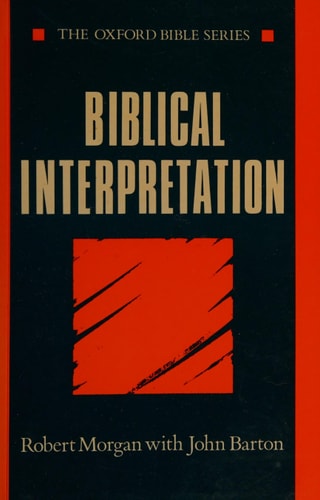
Biblical Interpretation
0
0
As an Amazon Associate and affiliate partner, Menrva Books earns from qualifying purchases. Learn more
Author Description
This book defines interpretation and examines the special issues that surround biblical interpretation. The authors analyze the development of traditional literary and historical criticism and more recent social, scientific, and literary approaches, focusing on the key figures from Reimarus to Gerd Theissen, and exposing the underlying theological issues. They reveal a pattern in the relationship between religious interests in the texts and the rational methods used to interpret them, providing guidance for a theologically sensitive use of the Bible today. The book includes an annotated index with detailed information on over two hundred fifty biblical scholars and other interpreters.
Menrva's Summary
THE THESIS
This work investigates the complex relationship between traditional religious interests and the rational, critical methods employed to interpret biblical texts. The authors, John J. Barton and Robert P. Morgan, utilize their expertise in biblical scholarship to trace the evolution of critical methodologies from the Enlightenment to the modern era. By examining the tension between historical-critical analysis and theological application, they provide a framework for understanding how the Bible is interpreted in contemporary academic and religious contexts.
THE SCOPE MAP
What You Will Find
- Historical development of literary and historical criticism
- Analysis of social, scientific, and literary interpretive approaches
- Profiles of key figures from Reimarus to Gerd Theissen
- An annotated index of over two hundred fifty biblical scholars
Scope Limits
- Does not provide a comprehensive verse-by-verse commentary
- Focuses primarily on Western academic interpretive traditions rather than global or non-Western perspectives
THE AUTHORITY PERSPECTIVE
Scholars and students frequently cite this text as a foundational resource for understanding the history of biblical hermeneutics. Readers often note the academic density of the prose, which serves as a rigorous introduction to the evolution of critical biblical scholarship.
Page Count:
352
Publication Date:
1988-11-17
Publisher:
Oxford University Press
ISBN-10:
0192132571
ISBN-13:
9780192132574
Religion
Academic
Bible
Hermeneutics
Theology
Community Tags
Similar Books