Ages of Gaia
0
0
As an Amazon Associate and affiliate partner, Menrva Books earns from qualifying purchases. Learn more
Author Description
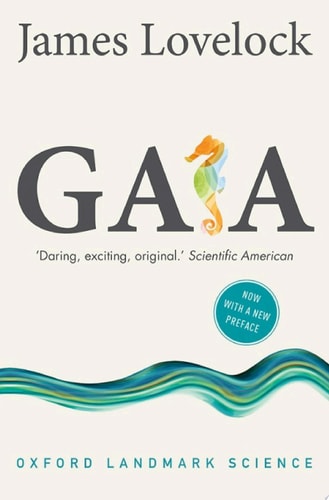
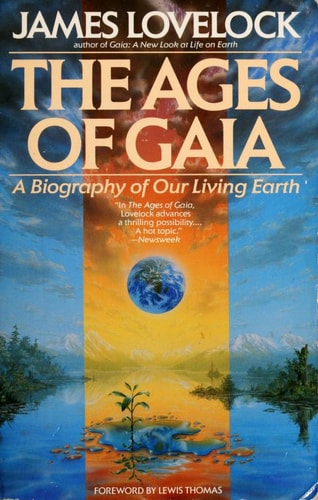
Open the cover and bathe in great draughts of air that excitingly argue the case that the earth is alive - David Bellamy, ObserverIn his first book, Gaia: A New Look at Life on Earth, James Lovelock proposed a startling new theory of life. Existing theories held that plants and animals evolve on, but are distinct from, an inanimate planet. James Lovelock's theory, Gaia, showed that Earth, its rocks, oceans, and atmosphere, and all living things are part of one great organism, evolving over the vast span of geological time. Much scientific work has since confirmed Lovelock's theory.IN this new book, Lovelock elaborates the basis of a new and unified view of the earth and life sciences, discussing recent scientific developments in detail: the greenhouse effect, acid rain, the depletion of the ozone layer and the effects of ultraviolet radiation, the emission of CFCs, and nuclear power. He demonstrates the geophysical interaction of atmosphere, oceans, climate, and the Earth's crust, regulated comfortably for life by living organisms using the energy of the sun.But Gaia is not always the benign life-force many people have taken her to be: Gaia theory forces a planetary perspective. It is the health of the planet that matters, not that of some individual species of organisms. This is where Gaia and the environmental movements, which are concerned first with the health of people, part company. This hypothesis not only raises profound philosophical questions: it also challenges both conservationists and the scientific establishment to think again.Cover photograph by Steve Krongard/The Image Bank
Menrva's Summary
THE THESIS
The book investigates the core question of whether the Earth functions as a single, self-regulating organism rather than a collection of independent biological and geological systems. James Lovelock, a scientist and independent researcher, builds upon his initial Gaia hypothesis by synthesizing decades of atmospheric and geological data. He argues that the planet's physical environment—including its oceans, crust, and atmosphere—is actively maintained by the collective activity of living organisms to create conditions favorable for life. This framework shifts the focus from individual species survival to the holistic health of the planetary system.
THE SCOPE MAP
What You Will Find
- Analysis of the greenhouse effect and ozone depletion.
- Examination of geophysical interactions between the atmosphere and the Earth's crust.
- Discussion of the impact of CFC emissions and nuclear power on planetary stability.
- A critique of traditional environmentalism from a planetary-health perspective.
Scope Limits
- The text does not provide a comprehensive manual for local conservation efforts.
- It does not offer detailed political policy solutions for climate change mitigation.
THE AUTHORITY PERSPECTIVE
Experts recognize this work as a significant expansion of the Gaia hypothesis, providing a more rigorous scientific foundation for the theory. Readers frequently note the density of the prose, which balances complex atmospheric science with provocative philosophical challenges to the environmental movement.
Page Count:
252
Publication Date:
1988-01-01
Publisher:
Oxford Univ Pr
ISBN-10:
0192177702
ISBN-13:
9780192177704
Science
Non-Fiction
Ecology
Gaia hypothesis
Earth Science
Community Tags
Similar Books