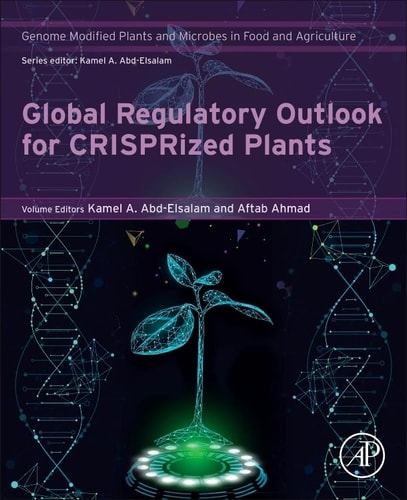
Global Regulatory Outlook for CRISPRized Plants
0
0
As an Amazon Associate and affiliate partner, Menrva Books earns from qualifying purchases. Learn more
Author Description
Global Regulatory Outlook for CRISPRized Plants summarizes CRISPR/Cas systems and applications for precise editing of plant genomes and discusses the global regulatory framework for CRISPR-edited crops. While CRISPR technology has become a routine, inexpensive, and efficient method to generate edited crops with superior traits, its future will be determined by how it is regulated. Understanding the current state of regulation, the concerns, issues, and foundations for decisions will be key in determining how this technology is used going forward. A major challenge to the world community in the future will be keeping food and energy production aligned with the increasing world population and changing climate. To meet the 21st-century population demands, the world needs to grow crop varieties with high yield, tolerance to drought, heat and salt, and with better nutritional values and shelf life. CRISPR technologies will likely continue to evolve and CRISPR crops will play a major role in future food security of the world. However, further commercialization of CRISPR crops requires addressing regulatory frameworks for GMOs and the overall global debate about appropriate regulation. A volume in the Genome Modified Plants and Microbes in Food and Agriculture series, Global Regulatory Outlook for CRISPRized Plants highlights the regulatory classification of CRISPR modifications such as SDN1, SDN2, and SDN3. The book discusses the social, ethical, governance, and policy issues related to CRISPR-edited crops. This important summary will be vital to the successful commercialization of CRISPR technology and biosafety concerns associated with this technology.
Menrva's Summary
THE THESIS
The book investigates the complex and evolving global regulatory landscape surrounding genetically edited crops, specifically those modified using CRISPR technology. It aims to provide a comprehensive overview of the current regulatory frameworks, ethical considerations, and policy debates that will shape the future commercialization of CRISPR-edited plants. By examining the social, ethical, governance, and policy issues, the book seeks to inform stakeholders and contribute to the ongoing discussion about biosafety and food security in the face of a growing global population and climate change.
THE SCOPE MAP
- Summary of CRISPR/Cas systems and their application in plant genome editing.
- Discussion of the global regulatory framework for CRISPR-edited crops.
- Analysis of regulatory classifications for CRISPR modifications (SDN1, SDN2, SDN3).
- Exploration of social, ethical, governance, and policy issues related to CRISPR-edited crops.
- Consideration of CRISPR crops' role in future food security and addressing global challenges.
- Highlighting the importance of regulatory frameworks for the commercialization of CRISPR technology.
THE AUTHORITY PERSPECTIVE
The book is positioned as a vital resource for understanding the regulatory challenges and opportunities presented by CRISPR technology in agriculture. Its focus on the global outlook suggests it aims to provide a broad perspective, essential for navigating the complexities of biosafety and commercialization. The discussion of ethical and policy issues indicates a comprehensive approach to the subject matter, likely appealing to researchers, policymakers, and industry professionals. The book's inclusion in the 'Genome Modified Plants and Microbes in Food and Agriculture' series further signals its specialized and authoritative nature.
Page Count:
570
Publication Date:
2023-11-16
Publisher:
Elsevier Science
ISBN-10:
0443184445
ISBN-13:
9780443184444
Science
Non-Fiction
Science & Technology
Genetics
Biotechnology
Agriculture
Ethics
Policy
Community Tags
Similar Books