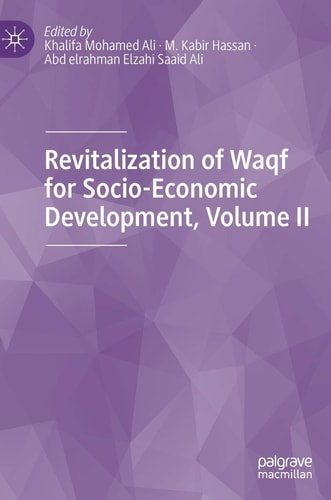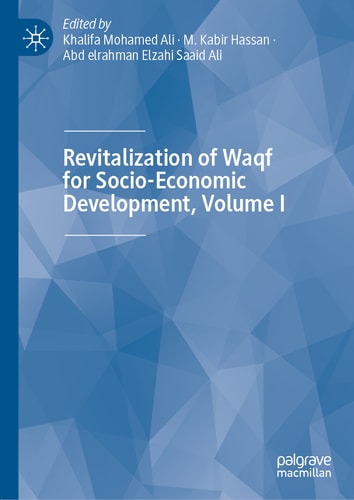
Revitalization of Waqf for Socio-Economic Development, Volume I
0
0
As an Amazon Associate and affiliate partner, Menrva Books earns from qualifying purchases. Learn more
Author Description
This book explores the various aspects of Waqf management in IsDB member countries/jurisdictions as well as in non-Muslim majority countries. Topics covered include Waqf regulation, its modernization and relationship to Maqasid Al-Shari’ah; performance of Waqf activities; time and activity-wise distribution of Waqf resource management; the antecedents and consequences of Waqf assets (both physical and cash); the strategies and models to promote Waqf-related activities for greater socio-economic development; good governance practices through the formulation of informed policies for Waqf projects; the confluence of Waqf, zakah, charity, and Islamic microfinance impacting socio-economic development and so on. Comprising different issues and perspectives adopted by various authors/researchers, the book is specifically designed to meet the needs of academics and industry practitioners in the field of Islamic finance to provide general and Shari’ah guidelines on the emerging issues withinthe subject.
Menrva's Summary
THE THESIS
This book investigates the multifaceted role of Waqf in fostering socio-economic development across diverse global contexts. It examines the regulatory frameworks, modernization efforts, and alignment with Maqasid Al-Shari’ah governing Waqf activities. The authors explore the performance metrics, resource management strategies, and the impact of both physical and cash Waqf assets, proposing models for enhanced socio-economic impact through good governance and informed policy formulation. Furthermore, it analyzes the synergistic effects of Waqf, zakah, charity, and Islamic microfinance on development outcomes.
THE SCOPE MAP
- Waqf regulation and its modernization in relation to Maqasid Al-Shari’ah
- Performance analysis of Waqf activities and resource management
- Antecedents and consequences of Waqf assets (physical and cash)
- Strategies and models for promoting Waqf activities for socio-economic development
- Good governance practices and policy formulation for Waqf projects
- The intersection of Waqf, zakah, charity, and Islamic microfinance
- Case studies and perspectives from IsDB member countries and non-Muslim majority nations
THE AUTHORITY PERSPECTIVE
This collection of research offers a comprehensive examination of Waqf management and its potential for socio-economic advancement. It is designed to serve both academics and practitioners in Islamic finance, providing insights into emerging issues and Shari’ah guidelines. The diverse perspectives presented aim to foster a deeper understanding of Waqf's role in development. The book addresses key areas such as regulation, governance, and the integration of Waqf with other financial instruments.
Page Count:
313
Publication Date:
2019-07-15
Publisher:
Springer Nature
ISBN-10:
3030184455
ISBN-13:
9783030184452
Business
Economics
Non-Fiction
Governance
Charity
Islamic Finance
Community Tags
Similar Books