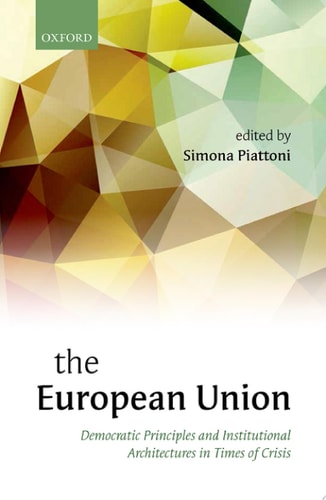
The European Union: Democratic Principles and Institutional Architectures in Times of Crisis
0
0
As an Amazon Associate and affiliate partner, Menrva Books earns from qualifying purchases. Learn more
Author Description
This book seeks to answer the question 'Which institutional architecture for which kind of democracy for the EU?' by bringing two important recent debates together- the institutional analysis of the Union and its democratic assessment. The book examines a series of institutional architectures in light of the democratic quality of the processes and decisions generated by them. The discussion of these various institutional architectures is preceded by an analysis of the democratic values and principles according to which institutional architectures and governance structures should be assessed. The first part of the volume starts from key democratic principles and indicates which institutional architectures are most likely to embody them. The second part is dedicated to those institutional architectures that best describe the current state of the European Union and its likely future development, particularly given the impact of the current economic crisis. The fundamental belief that animates this volume is that it is only by paying attention to the democratic legitimacy of the Union that the process of European integration may hope to be sustainable, particularly in the face of the difficult economic crisis that the members of the Euro-area and the Union in general are experiencing.
Menrva's Summary
THE THESIS
This book investigates the relationship between institutional design and democratic legitimacy within the European Union, specifically asking which institutional architectures best support democratic principles during periods of economic instability. Simona Piattoni, a scholar of political science and European integration, synthesizes institutional analysis with democratic theory to evaluate how governance structures impact the quality of political processes. The work argues that the sustainability of European integration depends heavily on the perceived democratic legitimacy of its governing bodies, particularly in the context of the Euro-area economic crisis.
THE SCOPE MAP
What You Will Find
- A theoretical framework for assessing democratic values in governance
- Comparative analysis of various institutional architectures within the EU
- Examination of the impact of the economic crisis on Union development
Scope Limits
- The text does not provide a comprehensive history of all EU treaties
- It focuses primarily on structural and normative analysis rather than granular economic policy data
THE AUTHORITY PERSPECTIVE
Scholars and students of European politics frequently cite this work for its clear synthesis of complex institutional theory and democratic principles. Experts highlight the text as a useful resource for understanding the structural tensions inherent in the Union's governance during periods of fiscal stress.
Page Count:
280
Publication Date:
2015-01-01
Publisher:
OUP Oxford
ISBN-10:
0191025577
ISBN-13:
9780191025570
Economics
International relations
Democracy
Governance
European
European Union
Community Tags
Similar Books