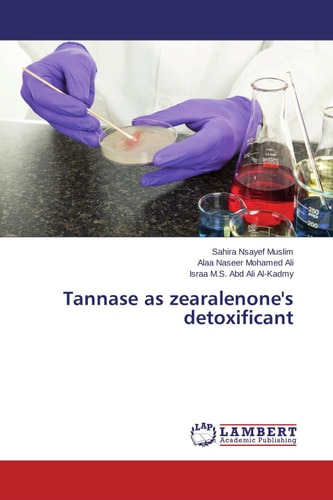
Tannase as Zearalenone's Detoxificant
0
0
As an Amazon Associate and affiliate partner, Menrva Books earns from qualifying purchases. Learn more
Author Description
Tannase has been used extensively pharmaceuticals and chemical industries. Zearalenone (ZEN) is a myco-estrogen in animals and a phytohormone in plants mainly produced by Fusarium graminearum. It leads to serious and chronic health-damaging effect on humans and animals. The aim of this study to investigate tannase ability to inhibit zearalenone production by Fusarium graminearum. Fish are susceptible to a wide variety of bacterial pathogens. Many of these bacteria capable of causing disease are considered by some to be saprophytic in nature. This bacteria only become pathogens when fishes are physiologically unbalanced, nutritionally deficient, or there are other stressors, i.e., poor water quality, overstocking, which allow opportunistic bacterial infections to proceed. Some of these bacterial pathogens of fishes are fastidious and require special growth media for laboratory culture. Others grow at different temperatures, dependent upon the aquatic environmental temperature of the fish
Menrva's Summary
THE THESIS
This study investigates the potential of tannase as an inhibitor of zearalenone production by Fusarium graminearum. The research explores the application of tannase, an enzyme widely used in pharmaceutical and chemical industries, to mitigate the harmful effects of zearalenone, a myco-estrogen that poses significant health risks to humans and animals. The text also touches upon opportunistic bacterial infections in fish, noting that these pathogens often exploit physiological imbalances and environmental stressors in their hosts.
THE SCOPE MAP
- Investigation into the inhibitory effects of tannase on zearalenone production.
- Analysis of zearalenone's properties as a myco-estrogen and phytohormone.
- Discussion of health implications of zearalenone for humans and animals.
- Exploration of opportunistic bacterial pathogens affecting fish.
- Factors contributing to bacterial infections in fish, including physiological and environmental stressors.
- Considerations for culturing fastidious bacterial pathogens of fish.
THE AUTHORITY PERSPECTIVE
suggests this work is a focused scientific inquiry into a specific biochemical and mycotoxicological problem. The inclusion of information on fish pathogens indicates a broader interest in animal health and potential applications of enzymatic or microbial control strategies. The text appears to be aimed at researchers and professionals in fields such as biochemistry, food safety, and veterinary science, offering detailed insights into the mechanisms of zearalenone inhibition and related aquatic health issues.
Page Count:
52
Publication Date:
2015-01-01
Publisher:
LAP LAMBERT Academic Publishing
ISBN-10:
3659687782
ISBN-13:
9783659687785
Non-Fiction
Science
Biochemistry
Food Safety
Animal Health
Mycology
Community Tags
Similar Books