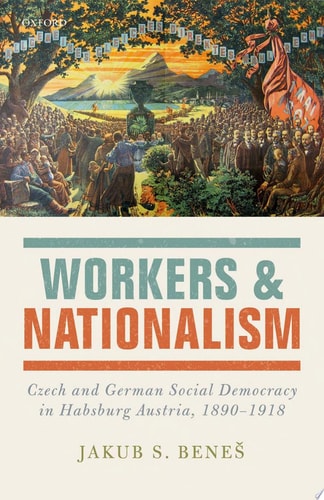
Workers and Nationalism
0
0
As an Amazon Associate and affiliate partner, Menrva Books earns from qualifying purchases. Learn more
Author Description
Internationalist Socialism And Ethnic Nationalism Are Usually Thought Of As Polar Opposites. But For The Millions Of Men And Women Who Made Social Democracy Into Twentieth-century Europe's Most Potent Political Force, They Were Often Mutually Reinforcing. Workers And Nationalism Explains This Apparent Paradox By Looking At The History Of The Social Democratic Workers' Movement In Habsburg Austria, Which Was Built On The Mobilization Of German And Czech Workers In The Empire's Rapidly Industrializing Regions Of Bohemia, Moravia, And Lower Austria. Jakub Beneš Takes The History Of Socialism Out Of The Realm Of Theoretical And Parliamentary Debates And Into The Streets, City Squares, Pubs, And Clubs Of A Vibrant But Precarious Multi-ethnic Society. He Reveals How Ordinary Workers Became Increasingly Nationalist As They Came To Believe That They Were The Genuine Representatives Of Their Ethnic National Communities. Their Successful Campaign To Democratize Parliamentary Elections In 1905-1907 Accelerated Such Thinking Rapidly. It Also Split Social Democracy Apart By 1911. Then, During The First World War, Many Czech And German Workers Embraced Revolutionary Radicalism, Alienating Them From The Regime-friendly Socialist Leadership. Beneš's Study Is The First To Show The Profound Connection Between Major Political Events And The Rich Culture Of The Austrian Workers' Movement, Revealing This Culture's Utopian And Quasi-religious Tendencies As Well As Its Left Populist Nationalism. Based On Research In Eight Archives And Numerous Libraries In Prague, Vienna, And Brno, Workers And Nationalism Fundamentally Rethinks The Relationship Between Socialism, Nationalism, And Democracy In Modern Europe.
Menrva's Summary
THE THESIS
This book investigates the historical paradox of how internationalist socialism and ethnic nationalism functioned as mutually reinforcing forces within the social democratic movements of the late Habsburg Empire. Jakub S. Beneš, a historian specializing in Central European labor movements, utilizes extensive archival research from Prague, Vienna, and Brno to challenge the traditional view that socialism and nationalism were inherently polar opposites. He argues that the mobilization of German and Czech workers in industrializing regions created a unique form of left-wing populist nationalism that ultimately reshaped the political landscape of early twentieth-century Europe.
THE SCOPE MAP
What You Will Find
- Analysis of the social democratic workers' movement in Bohemia, Moravia, and Lower Austria.
- Examination of the 1905-1907 parliamentary election campaigns and their impact on worker identity.
- Exploration of the cultural and quasi-religious dimensions of the Austrian labor movement.
- Documentation of the shift toward revolutionary radicalism during the First World War.
Scope Limits
- The study focuses primarily on the German and Czech populations within the Habsburg Empire rather than the entire breadth of European socialist movements.
- The analysis concludes with the radicalization period during the First World War and does not extend into the post-imperial state-building era.
THE AUTHORITY PERSPECTIVE
Scholars recognize this work as a significant contribution to the study of labor history and the complexities of multi-ethnic political mobilization. Readers frequently note the academic density of the prose and the depth of the archival evidence provided to support the author's arguments.
Page Count:
272
Publication Date:
2016-01-01
Publisher:
Oxford University Press
ISBN-10:
0192506307
ISBN-13:
9780192506306
History
European History
Nationalism
Labor history
Socialism
Community Tags
Similar Books