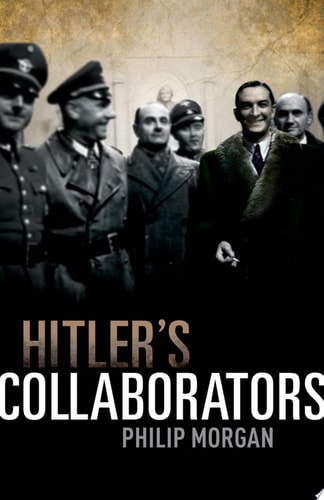
Hitler's Collaborators: Choosing Between Bad and Worse in Nazi-Occupied Western Europe
0
0
As an Amazon Associate and affiliate partner, Menrva Books earns from qualifying purchases. Learn more
Author Description
Hitler's Collaborators focuses the spotlight on one of the most controversial and uncomfortable aspects of the Nazi wartime occupation of Europe: the citizens of those countries who helped Hitler. Although a widespread phenomenon, this was long ignored in the years after the war, when peoples and governments understandably emphasized popular resistance to Nazi occupation as they sought to reconstruct their devastated economies and societies along anti-fascist and democratic lines. Philip Morgan moves away from the usual suspects, the Quislings who backed Nazi occupation because they were fascists, and focuses instead on the businessmen and civil servants who felt obliged to cooperate with the Nazis. These were the people who faced the most difficult choices and dilemmas by dealing with the various Nazi authorities and agencies, and who were ultimately responsible for gearing the economies of the occupied territories to the Nazi war effort. It was their choices which had the greatest impact on the lives and livelihoods of their fellow countrymen in the occupied territories, including the deportation of slave-workers to the Reich and hundreds of thousands of European Jews to the death camps in the East. In time, as the fortunes of war shifted so decisively against Germany between 1941 and 1944, these collaborators found themselves trapped by the logic of their initial cooperation with their Nazi overlords—caught up between the demands of an increasingly desperate and extremist occupying power, growing internal resistance to Nazi rule, and the relentlessly advancing Allied armies.
Menrva's Summary
THE THESIS
This book investigates the complex motivations and moral dilemmas faced by non-fascist citizens in Nazi-occupied Western Europe who chose to cooperate with the German administration. Philip Morgan, a historian specializing in modern European history, utilizes archival records and post-war administrative data to challenge the binary narrative of resistance versus collaboration. He argues that for many businessmen and civil servants, cooperation was not an ideological choice but a pragmatic, albeit devastating, response to the constraints of occupation.
THE SCOPE MAP
What You Will Find
- Analysis of economic and administrative collaboration in occupied Western Europe
- Examination of the shift from initial cooperation to entrapment as the war turned against Germany
- Case studies of civil servants and business leaders navigating Nazi demands
Scope Limits
- The text focuses primarily on Western Europe rather than the Eastern Front
- It does not provide a comprehensive biography of high-level political Quislings
THE AUTHORITY PERSPECTIVE
Historians recognize this work as a nuanced contribution to the study of wartime occupation, specifically for its focus on the 'gray zone' of administrative cooperation. Readers frequently note the academic density of the prose and the author's balanced approach to sensitive historical subjects.
Page Count:
400
Publication Date:
2018-01-01
Publisher:
Oxford University Press,
ISBN-10:
0192507087
ISBN-13:
9780192507082
History
World War
Military History
Collaborationists
European History
Community Tags
Similar Books