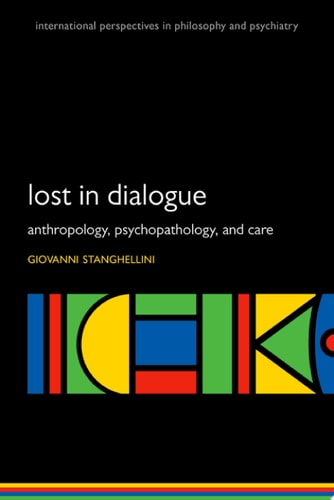
Lost in Dialogue
0
0
As an Amazon Associate and affiliate partner, Menrva Books earns from qualifying purchases. Learn more
Author Description
The Field Of Psychiatry Has Long Struggled With Developing Models Of Practice; Most Underemphasize The Interpersonal Aspects Of Clinical Practice. This Essay Is Unique In Putting Intersubjectivity Front And Center. It Is An Attempt To Provide A Clinical Method To Re-establish The Fragile Dialogue Of The Soul With Oneself And With Others. Throughout, The Book Builds On The Assumption That To Be Human Means To Be In Dialogue. It Uses Dialogue As A Unitary Concept To Address Three Essential Issues For Clinical Practice: 'what Is A Human Being?', 'what Is Mental Pathology'?, And 'what Is Care?'. To Be Human - It Is Argued - Means To Be In Dialogue With Oneself And With Other Persons. Thus, Mental Pathology Is The Interruption Of This Dialogue - Both Of The Person With The Alterity That Inhabits Them, And With The Alterity Incarnated In Other Persons. Therefore, Therapy Is A Dialogue With A Method Whose Aim Is To Re-enact One's Interrupted Dialogue With Alterity. Lost In Dialogue Provides A Method To Approximate The Other, To Understand Its Experiences, Actions, And In General, Understand The World In Which It Lives.
Menrva's Summary
THE THESIS
This work investigates the fundamental role of intersubjectivity and dialogue in defining human existence, mental pathology, and the therapeutic process. Giovanni Stanghellini, a psychiatrist and philosopher, argues that human identity is constructed through continuous dialogue with oneself and others. He proposes a clinical framework where mental illness is viewed as an interruption of this dialogue, and therapy serves as a method to restore these broken connections with alterity.
THE SCOPE MAP
What You Will Find
- A philosophical inquiry into the nature of human being and mental pathology
- A clinical methodology for re-establishing interpersonal dialogue
- Conceptual definitions of care within a psychiatric context
Scope Limits
- The text does not provide a manual for pharmacological interventions
- It does not cover neurobiological or strictly empirical diagnostic criteria
THE AUTHORITY PERSPECTIVE
Experts in phenomenological psychiatry identify this text as a significant contribution to the study of intersubjectivity in clinical practice. Readers frequently note the philosophical density of the prose, which requires a background in clinical theory to fully synthesize the author's arguments.
Page Count:
296
Publication Date:
2016-01-01
Publisher:
Oxford University Press
ISBN-10:
0192512145
ISBN-13:
9780192512147
Philosophy of
Psychiatry
Psychotherapy
Mental Health
Community Tags
Similar Books