Europe's Utopias of Peace
0
0
As an Amazon Associate and affiliate partner, Menrva Books earns from qualifying purchases. Learn more
Author Description
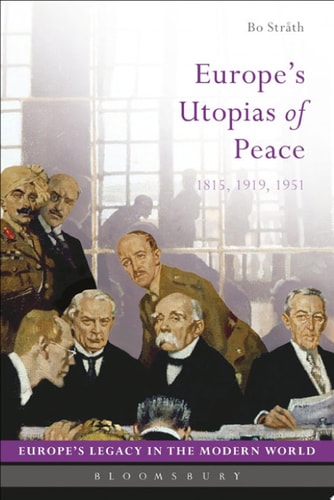
Europe's Utopias of Peace explores attempts to create a lasting European peace in the aftermath of the Napoleonic wars and the two world wars. The book charts the 250 year cycle of violent European conflicts followed by new utopian formulations for peace. The utopian illusion was that future was predictable and rules could prescribe behaviour in conflicts to come. Bo Stråth examines the reiterative bicentenary cycle since 1815, where each new postwar period built on a design for a project for European unification. He sets out the key historical events and the continuous struggle with nationalism, linking them to legal, political and economic thought. Biographical sketches of the most prominent thinkers and actors provide the human element to this narrative. Europe's Utopias of Peace presents a new perspective on the ideological, legal, economic and intellectual conditions that shaped Europe since the 19th century and presents this in a global context. It challenges the conventional narrative on Europe's past as a progressive enlightenment heritage, highlighting the ambiguities of the legacies that pervade the institutional structures of contemporary Europe. Its long-term historical perspective will be invaluable for students of contemporary Europe or modern European history.
Menrva's Summary
THE THESIS
This book investigates the recurring cycle of European conflict and the utopian visions of peace that emerged in its wake. Bo Stråth, a historian, examines the 250-year pattern of violent European conflicts, beginning with the Napoleonic wars and continuing through the two World Wars, and the subsequent attempts to formulate lasting peace. The central argument posits that the 'utopian illusion' lay in the belief that the future was predictable and that rules could govern future conflicts. Stråth traces this reiterative cycle since 1815, where each postwar era was marked by projects for European unification, linking historical events and the persistent force of nationalism to legal, political, and economic thought.
THE SCOPE MAP
- Analysis of the 250-year cycle of European conflicts and peace formulations since 1815.
- Examination of the 'utopian illusion' in predicting future behavior and establishing rules for conflict.
- Exploration of the continuous struggle with nationalism and its links to legal, political, and economic thought.
- Biographical sketches of prominent thinkers and actors involved in peace initiatives.
- A new perspective on the ideological, legal, economic, and intellectual conditions shaping Europe since the 19th century.
- Consideration of these developments within a global context.
- A challenge to the conventional narrative of Europe's past as a progressive enlightenment heritage.
THE AUTHORITY PERSPECTIVE
The book is presented as a valuable resource for students of contemporary Europe and modern European history, offering a long-term historical perspective. It challenges conventional narratives by highlighting the ambiguities within Europe's legacies that continue to influence contemporary institutional structures. The work's examination of ideological, legal, economic, and intellectual conditions, placed within a global context, provides a fresh viewpoint on Europe's past. The author's approach, which includes biographical sketches, aims to humanize the complex historical and intellectual currents.
Page Count:
528
Publication Date:
2016-01-28
Publisher:
Bloomsbury UK
ISBN-10:
1474237754
ISBN-13:
9781474237758
Non-Fiction
History
Political History
Intellectual History
International relations
European History
Community Tags
Similar Books