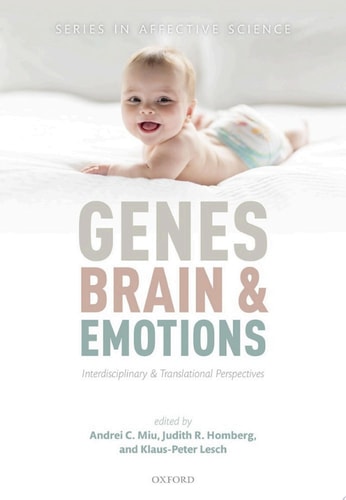
Genes, Brain, and Emotions: Interdisciplinary and Translational Perspectives
0
0
As an Amazon Associate and affiliate partner, Menrva Books earns from qualifying purchases. Learn more
Author Description
The study of emotions has rapidly expanded in recent decades, incorporating interdisciplinary research on the genetic underpinnings and neural mechanisms of emotion. This has involved a wide range of methods from as varied fields as behavioral genetics, molecular biology, and cognitive neuroscience, and has allowed researchers to start addressing complex multi-level questions such as: what is the role of genes in individual differences in emotions and emotional vulnerability to psychopathology, and what are the neural mechanisms through which genes and experience shape these emotion? Genes, Brain, and Emotions: Interdisciplinary and translational perspectives offers a comprehensive account of this interdisciplinary field of research, bridging psychology, genetics, and neuroscience, with rich sections dedicated to methods, cognitive and biological mechanisms, and psychopathology. Written by leading researchers who have each inspired new research directions and innovated methods and concepts, this book will be of interest to anyone working or studying in the field of affective science, whether they be behavioural geneticists, psychologists and psychiatrists, or cognitive neuroscientists.
Menrva's Summary
THE THESIS
This volume investigates the complex interplay between genetic architecture, neural mechanisms, and environmental factors in the development and regulation of human emotions. The authors, Andrei C. Miu, Judith R. Homberg, and Klaus-Peter Lesch, synthesize findings from behavioral genetics, molecular biology, and cognitive neuroscience to provide a multi-level framework for understanding emotional vulnerability and individual differences in affective processing.
THE SCOPE MAP
What You Will Find
- Analysis of genetic influences on emotional reactivity and regulation
- Integration of molecular biology with cognitive neuroscience methodologies
- Examination of the biological basis of emotional psychopathology
- Translational perspectives on how gene-environment interactions shape affective phenotypes
Scope Limits
- The text does not provide a general introduction to basic psychology or introductory genetics.
- It focuses primarily on biological and neuroscientific mechanisms rather than purely sociological or philosophical theories of emotion.
THE AUTHORITY PERSPECTIVE
Experts recognize this work as a comprehensive synthesis of the current state of affective science, suitable for researchers and advanced students in the field. Readers frequently note the academic density of the prose, which assumes a foundational understanding of neuroscience and genetic research methods.
Page Count:
451
Publication Date:
2019-01-01
Publisher:
OUP Oxford
ISBN-10:
0192511432
ISBN-13:
9780192511430
Science
Psychology
Genetics
Affective Science
Neuroscience