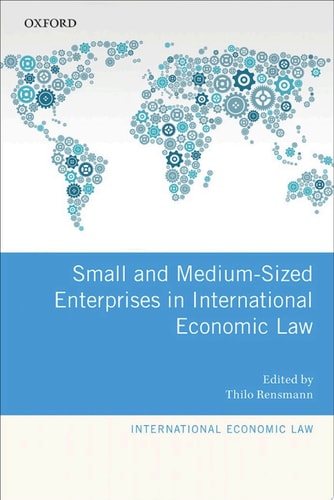
Small and Medium-Sized Enterprises in International Economic Law
0
0
As an Amazon Associate and affiliate partner, Menrva Books earns from qualifying purchases. Learn more
Author Description
International economic law, with its traditional focus on large multinational enterprises, is only slowly waking up to the new reality of small and medium-sized enterprises (SMEs), entering the global marketplace. In the wake of the digital revolution, smaller companies now play an important role in the global economic landscape. In 2015 the UN expressly called for SMEs to have greater access to international trade and investment, and it is increasingly recognized that the integration of SMEs provides one of the keys to creating a more sustainable and inclusive global economy. As SMEs increasingly permeate transnational supply chains, so interactions between these companies and international economic law and policy proliferate. Small and Medium-sized Enterprises in International Economic Law offers the first comprehensive analysis of the interaction between SMEs and international economic law. This book presents a broad international perspective, gathering together contributions by leading experts from academia, legal practice, and international organizations. It opens up a field of enquiry into this so far unexplored dynamic and provide a touchstone for future debate. The analysis covers a broad spectrum of international trade and investment law focusing on issues of particular interest to SMEs, such as trade in services, government procurement, and trade facilitation. Diverse perspectives illuminate regional developments (in particular within the EU) and the implications of mega-regional free trade agreements. The essays also examine questions of legitimacy of global economic governance; in particular, concerns surrounding the threat posed to the interests of domestic SMEs by the growing liberalization of international trade and investment. These essays constitute essential reading for practitioners and academics seeking to navigate a previously neglected trend in international economic law.
Menrva's Summary
THE THESIS
This book investigates the intersection of small and medium-sized enterprises (SMEs) with the framework of international economic law, addressing the historical oversight of these entities in global trade policy. Edited by Thilo Rensmann, the text compiles contributions from legal scholars, practitioners, and representatives of international organizations to examine how SMEs function within current trade and investment regimes. It argues that integrating SMEs is vital for a sustainable and inclusive global economy, particularly in the context of digital transformation and transnational supply chains.
THE SCOPE MAP
What You Will Find
- Analysis of trade in services, government procurement, and trade facilitation as they relate to SMEs
- Examination of regional developments, specifically within the European Union
- Discussion on the impact of mega-regional free trade agreements on smaller market participants
Scope Limits
- Does not provide a manual for individual SME legal compliance
- Does not cover domestic corporate law outside the context of international trade obligations
THE AUTHORITY PERSPECTIVE
Experts identify this work as a foundational text for understanding the shift in international economic law toward smaller market actors. Readers frequently note the academic density of the prose, which serves as a primary resource for legal practitioners and scholars navigating this emerging field of study.
Page Count:
408
Publication Date:
2017-01-01
Publisher:
OUP Oxford
ISBN-10:
0192515160
ISBN-13:
9780192515162
Business
Economics
Law
Small Business
International Trade
Professional Career & Trade
Community Tags
Other Editions(2)
Similar Books



Reader Comments
Share Your Thoughts
No comments yet. Be the first to share your thoughts!