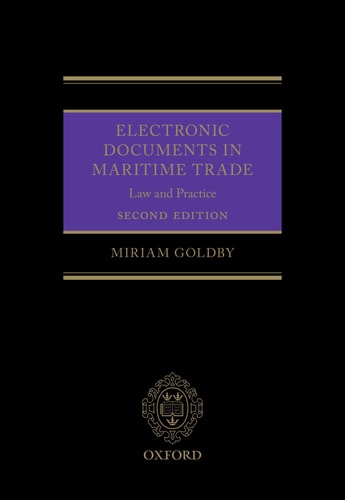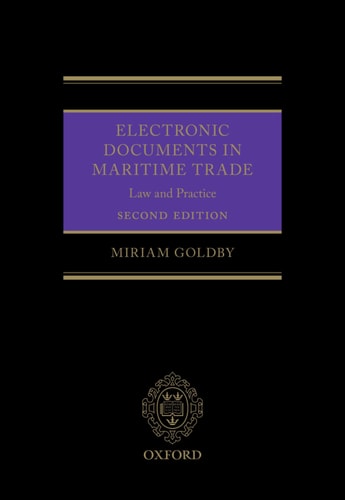
Electronic Documents in Maritime Trade: Law and Practice
0
0
As an Amazon Associate and affiliate partner, Menrva Books earns from qualifying purchases. Learn more
Author Description
The book provides a critical analysis of electronic alternatives to documents used in the international sale of goods carried by sea, including invoices, bills of lading, certificates of insurance, as well as other documentation required under documentary credits, and payment processing arrangements. It constitutes an in-depth discussion of their legal status and the practices relating to their use. The new edition examines recent developments in the evolving digital transformation that is taking place in the field of international trade. The book examines the commercial pressure to move from paper to electronic data, and the new technologies and relationships built for this purpose. This transition is ever evolving and as such an understanding of the attendant legal implications of the change is crucial. Analysis is provided on the adoption by UNCITRAL of its Model Law on Electronic Transferable Records, the author having been involved first hand in its drafting as a delegate and observer in UNCITRAL Working Group IV, and on the Uniform Rules on Bank Payment Obligations (URBPO). The book considers the practical workings and legal underpinnings of new electronic bill of lading platforms such as e-Title and Placing Platform Limited and of pilot projects such as Wave BL, Marco Polo and Voltron. It also examines the legal implications of proposed uses of new technologies such as distributed ledger technologies (DLT) (including blockchain), Internet of Things (IoT) and smart contracts. This book provides a complete and practical analysis of e-documents in cross-border business contracts for goods carried by sea. It examines recent trends in practice and assesses the ability of electronic alternatives to achieve legal functions performed by the paper documents they replace.
Menrva's Summary
THE THESIS
This text investigates the legal status and practical implementation of electronic documentation within the international maritime trade sector. Miriam Goldby, an expert in international commercial law and a contributor to UNCITRAL drafting processes, provides a rigorous examination of the transition from traditional paper-based systems to digital alternatives. The work evaluates how current legal frameworks accommodate emerging technologies and whether these digital substitutes effectively replicate the functions of established paper documents.
THE SCOPE MAP
What You Will Find
- Analysis of the UNCITRAL Model Law on Electronic Transferable Records and Uniform Rules on Bank Payment Obligations.
- Evaluation of electronic bill of lading platforms including e-Title, Wave BL, and Placing Platform Limited.
- Examination of distributed ledger technologies, blockchain, smart contracts, and Internet of Things applications in trade.
- Assessment of legal implications regarding invoices, certificates of insurance, and payment processing.
Scope Limits
- The text focuses primarily on maritime trade and may not cover domestic land-based logistics or non-maritime supply chain documentation in equal depth.
THE AUTHORITY PERSPECTIVE
Legal scholars and practitioners recognize this work as a primary reference for understanding the intersection of maritime law and digital transformation. Readers frequently note the high level of technical detail and the author's unique insight gained from direct participation in international regulatory drafting.
Page Count:
448
Publication Date:
2019-01-01
Publisher:
OUP Oxford
ISBN-10:
0192539973
ISBN-13:
9780192539977
International Trade
Technology Law
Contracts Maritime
Maritime law
Logistics
Law
Professional Career & Trade
Commercial law