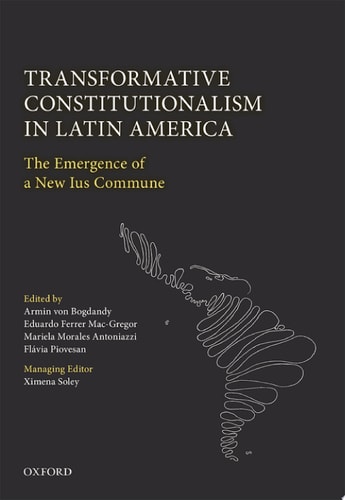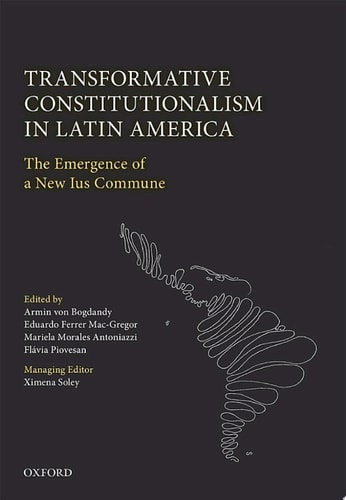
Transformative Constitutionalism in Latin America: The Emergence of a New Ius Commune
0
0
As an Amazon Associate and affiliate partner, Menrva Books earns from qualifying purchases. Learn more
Author Description
This ground-breaking collection of essays outlines and explains the unique development of Latin American jurisprudence. It introduces the idea of the Ius Constitutionale Commune en América Latina (ICCAL), an original Latin American path of transformative constitutionalism, to an Anglophone audience for the first time. It charts the key developments that have transformed the region and assesses the success of the constitutional projects that followed a period of authoritarian regimes in Latin America. Coined by scholars who have been documenting, conceptualizing, and comparing the development of Latin American public law for more than a decade, the term ICCAL encompasses themes that cross national borders and legal fields, taking in constitutional law, administrative law, general public international law, regional integration law, human rights, and investment law. Not only does this volume map the legal landscape, it also suggests measures to improve society via due legal process and a rights-based, supranational and regionally rooted constitutionalism. The editors contend that with the strengthening of democracy, the rule of law, and human rights, common problems such as the exclusion of wide sectors of the population from having a say in government, as well as corruption, hyper-presidentialism, and the weak normativity of the law can be combatted more effectively in future.
Menrva's Summary
THE THESIS
This collection investigates the emergence and theoretical framework of the Ius Constitutionale Commune en América Latina (ICCAL) as a distinct model of transformative constitutionalism. The editors, prominent scholars in the field of public law, synthesize over a decade of comparative research to argue that a regional, rights-based approach to constitutionalism can effectively address systemic issues such as corruption, hyper-presidentialism, and social exclusion in post-authoritarian Latin American states.
THE SCOPE MAP
What You Will Find
- A comprehensive conceptualization of the ICCAL framework across various legal disciplines.
- Analysis of the intersection between constitutional law, human rights, and regional integration.
- Comparative assessments of constitutional projects following periods of authoritarian rule.
Scope Limits
- The text focuses primarily on the development of public law and does not provide an exhaustive history of every individual Latin American nation's political evolution.
THE AUTHORITY PERSPECTIVE
Legal scholars and practitioners identify this volume as a primary resource for understanding the evolution of Latin American jurisprudence toward a supranational, rights-oriented model. The text is noted for its academic rigor and its utility in bridging the gap between regional legal developments and the broader Anglophone legal community.
Page Count:
448
Publication Date:
2017-01-01
Publisher:
OUP Oxford
ISBN-10:
0192515470
ISBN-13:
9780192515476
Human rights
Law
Constitutional Law
Professional Career & Trade
International Law
Public Policy
American Studies
Community Tags
Similar Books