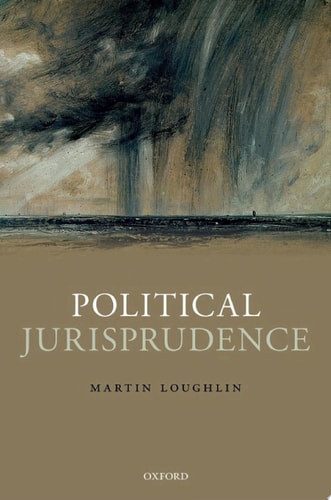
Political Jurisprudence
0
0
As an Amazon Associate and affiliate partner, Menrva Books earns from qualifying purchases. Learn more
Author Description
Political jurisprudence is the branch of jurisprudence that treats law as an aspect of human experience called 'the political'. This is an approach that many contemporary jurists, those whose work presupposes the autonomy of legal order, tend to suppress. In this book, Martin Loughlin assesses the contribution made by political jurists and explains its contemporary significance. Political jurists maintain that the essential characteristics of modern legal order can only be revealed by considering how political authority is constituted. The political is orientated to the fact that people are organized into territorially-bounded units within which authoritative governing arrangements have been established, but the authority of this way of viewing the world is strengthened only through institution-building. Law may be an aspect of the political, but to perform its authority-generating functions effectively it must operate relatively autonomously. The political and the legal operate relationally, without one being reduced to the other. Loughlin introduces the rich literature of political jurisprudence through essays on innovative political jurists such as Hobbes, Burke, Constant, Romano, and Schmitt, and on such central themes as political right, institutionalism, constitutional legality, and reason of state. Building on his earlier books, The Idea of Public Law (OUP 2003) and Foundations of Public Law (OUP 2010), this collection extends his account of this influential strand of European legal thought.
Menrva's Summary
THE THESIS
This book investigates the core question of how law functions as an inherent aspect of political authority rather than as an autonomous, self-contained system. Martin Loughlin, a prominent scholar of public law, utilizes historical analysis and critical examination of European legal thought to argue that modern legal orders are fundamentally constituted by political processes. By synthesizing the work of key political jurists, he demonstrates that law and politics operate in a relational capacity where neither can be fully reduced to the other.
THE SCOPE MAP
What You Will Find
- Analysis of political jurists including Hobbes, Burke, Constant, Romano, and Schmitt
- Examination of central themes such as political right, institutionalism, and reason of state
- Theoretical framework connecting public law to the constitution of political authority
Scope Limits
- Does not provide a comprehensive history of all legal systems globally
- Focuses primarily on European legal thought rather than comparative international law
THE AUTHORITY PERSPECTIVE
Scholars and legal theorists recognize this work as a significant contribution to the study of public law and the intellectual history of jurisprudence. Readers frequently note the academic density of the prose, which is intended for advanced students and professionals in the fields of law and political science.
Page Count:
199
Publication Date:
2017-01-01
Publisher:
OUP Oxford
ISBN-10:
019253839X
ISBN-13:
9780192538390
Constitutional Law
Professional Career & Trade
Political Philosophy
Law
Jurisprudence
Legal Theory
Community Tags
Similar Books