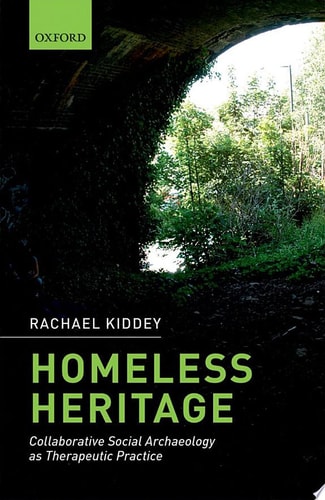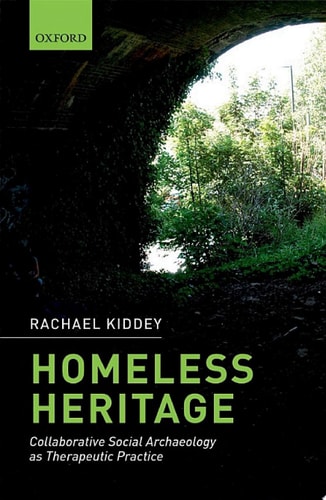
Homeless Heritage: Collaborative Social Archaeology as Therapeutic Practice
Author Description
Homeless Heritage describes the process of using archaeological methodologies to collaboratively document how contemporary homeless people use and experience the city. Drawing on fieldwork undertaken in Bristol and York, the book first describes the way in which archaeological methods and theory have come to be usefully applied to the contemporary world, before exploring the historical development of the concept of homelessness. Working with homeless people, the author undertook surveys and two excavations of contemporary homeless sites, and the team co-curated two public heritage exhibitions - with surprising results. Complementing a growing body of literature that details how collaborative and participatory heritage projects can give voice to marginalised groups, Homeless Heritage details what it means to be homeless in the twenty first century.
Menrva's Summary
THE THESIS
This book investigates how archaeological methodologies can be adapted to collaboratively document the lived experiences and urban spatial usage of contemporary homeless populations. Rachael Kiddey, an archaeologist specializing in contemporary social issues, utilizes fieldwork conducted in Bristol and York to bridge the gap between traditional material culture studies and modern social advocacy. The author argues that by involving homeless individuals in the excavation and curation process, heritage practice becomes a therapeutic and empowering tool that challenges societal perceptions of marginalization.
THE SCOPE MAP
What You Will Find
- Archaeological surveys and excavations of contemporary homeless sites in Bristol and York
- A framework for collaborative and participatory heritage curation
- Historical analysis of the development of homelessness as a social concept
- Methodologies for applying material culture theory to contemporary urban environments
Scope Limits
- The study is geographically restricted to specific urban centers in the United Kingdom
- The research does not provide a comprehensive policy guide for solving homelessness, focusing instead on the heritage and social documentation aspects
THE AUTHORITY PERSPECTIVE
Scholars in the field of contemporary archaeology frequently cite this work as a primary example of how material culture studies can be applied to social justice initiatives. Readers often note the academic rigor of the methodology while appreciating the accessible, human-centered approach to the subject matter.
Page Count:
229
Publication Date:
2017-01-01
Publisher:
OUP Oxford
ISBN-10:
0192536532
ISBN-13:
9780192536532
Urban Studies
Social Science
Archaeology
Sociology
Homelessness
Public Heritage
Community Tags
Similar Books