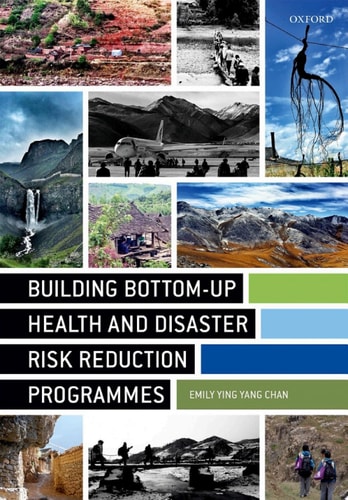
Building Bottom-up Health and Disaster Risk Reduction Programmes
0
0
As an Amazon Associate and affiliate partner, Menrva Books earns from qualifying purchases. Learn more
Author Description
As a backdrop of the Sustainable Development Goals (SDGs) (2016-2030), the United Nations pointed out that more than 6 million children still died before the age of five by 2015. At least 1.8 billion people across the world still consumed fecally contaminated drinking water and 2.4 million lacked access to basic sanitation services such as toilets or latrines, while nearly 1,000 children died every day of preventable water and sanitation-related diarrhoeal diseases. Rural areas fare far worse: Children in rural areas are about 1.7 times more likely to die before their fifth birthday as those in urban areas. About 16 per cent of the rural population do not use improved drinking water sources, compared to 4 per cent of the urban population. About 50 per cent of people living in rural areas lack improved sanitation facilities, compared to only 18 per cent of people in urban areas. Far too many one-off rural on-site public health knowledge transfer projects fail to deliver results in the long run, and the knowledge in question cannot be retained in the rural communities after the NGO and development workers are gone. In addition to external constraints, this is often due to a lack of theoretical understanding among NGO practitioners and volunteers and basis for evaluation and improvement of health relief programmes. Based on public health theories and illustrated by relevant examples, this book introduces how health, emergency and disaster preparedness education programmes could be organised in remote rural Asia, which could become useful reference materials for organisers and volunteers of rural development projects. This book is an introductory to intermediate level textbook and reference book for healthcare professionals, fieldworkers, volunteers and students who are interested in promoting health and emergency and disaster risk reduction. The book is developed from the experience and insights gained from the long-established CCOUC Ethnic Minority Health Project in C
Menrva's Summary
THE THESIS
This book investigates how to design and sustain effective, bottom-up public health and disaster risk reduction programs in remote rural Asian communities. Author Emily Ying Yang Chan, drawing on her extensive experience with the CCOUC Ethnic Minority Health Project, argues that many development initiatives fail due to a lack of theoretical grounding and poor knowledge retention. She provides a framework for practitioners to move beyond one-off interventions toward long-term, community-integrated health education and emergency preparedness.
THE SCOPE MAP
What You Will Find
- Theoretical frameworks for public health education in rural settings
- Methodologies for disaster risk reduction and emergency preparedness
- Practical examples derived from the CCOUC Ethnic Minority Health Project
- Guidelines for NGO practitioners, volunteers, and fieldworkers
Scope Limits
- The text focuses primarily on remote rural Asian contexts
- It does not provide exhaustive coverage of urban-based health policy or large-scale national infrastructure projects
THE AUTHORITY PERSPECTIVE
Experts identify this work as a practical resource for fieldworkers and students seeking to bridge the gap between academic theory and rural implementation. Readers frequently note the book's utility as an introductory to intermediate reference for those involved in humanitarian aid and community health development.
Page Count:
358
Publication Date:
2017-01-01
Publisher:
OUP Oxford
ISBN-10:
0192533975
ISBN-13:
9780192533975
Categories
Medicine
Rural Health
Health Policy
International Development
Social Science
Public Health
Kindle eBooks
Kindle Store
Community Tags
Other Editions(3)

Similar Books

Reader Comments
Share Your Thoughts
No comments yet. Be the first to share your thoughts!