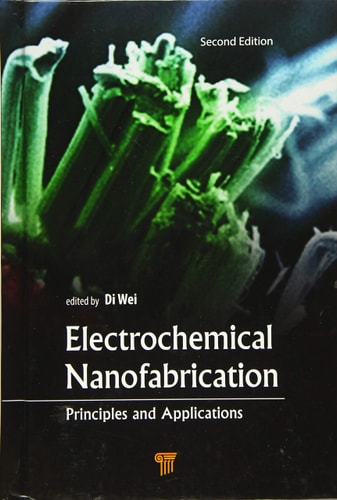
Electrochemical Nanofabrication
0
0
As an Amazon Associate and affiliate partner, Menrva Books earns from qualifying purchases. Learn more
Author Description
Nanotechnology has attracted billions of dollars in venture capital from research institutes, governments, and industries in recent years. Traditional nanofabrication techniques such as CVD, sol–gel, and self-assembly have been intensively studied. However, the electrochemical nanofabrication technique, which offers huge benefits for manufacturing nanomaterials as well as broad applications in industries, has not been given much attention compared with the traditional nanofabrication methods. This book fits the niche of such technology because it summarizes various electrochemical nanofabrication methods and shows their various essential applications in areas such as batteries, sensors, and many future technologies. With the development of nanotechnology and nanomaterials, the arena of electrochemical nanofabrication has expanded significantly. The first edition of this book was drafted in 2009. In 2010, the Nobel Prize in Physics was awarded to Prof. Konstantin Novoselov and Prof. Andre Geim from the University of Manchester for their groundbreaking experiments on the two-dimensional material graphene. Three years later, the European Commission launched the European Union’s biggest ever research initiative, the Graphene Flagship, with a budget of 1 billion euros. In light of these developments, this new edition of the book is enriched with the synthesis of graphene-based materials through electrochemical methods, the applications of graphene in lithium-ion and sodium-ion batteries, and the use of graphene composites in various sensing platforms. It will be of immense interest to a broad audience in nanotechnology and electrochemistry.
Menrva's Summary
THE THESIS
This book explores the underutilized field of electrochemical nanofabrication, highlighting its significant advantages over traditional methods for creating nanomaterials and its broad industrial applications. The author, Di Wei, addresses the relative lack of attention given to this technique by summarizing various electrochemical nanofabrication methods and detailing their essential applications in critical areas such as batteries and sensors. The text is updated to include recent advancements, particularly concerning the synthesis and application of graphene-based materials, reflecting the rapid developments in nanotechnology and electrochemistry since the first edition.
THE SCOPE MAP
- Comprehensive overview of various electrochemical nanofabrication methods.
- Detailed discussion of applications in batteries, including lithium-ion and sodium-ion.
- Exploration of sensor applications utilizing graphene composites.
- Synthesis of graphene-based materials through electrochemical techniques.
- Comparison of electrochemical nanofabrication with traditional methods like CVD, sol-gel, and self-assembly.
- Insights into future technological applications of nanomaterials.
THE AUTHORITY PERSPECTIVE
The book is positioned as a key resource for understanding electrochemical nanofabrication, a field with significant industrial potential that has historically received less attention than other nanofabrication techniques. The updated edition specifically incorporates recent breakthroughs, such as the Nobel Prize-winning work on graphene and the European Union's Graphene Flagship initiative, indicating a focus on cutting-edge research. The content is designed to be of substantial interest to a broad audience within the fields of nanotechnology and electrochemistry, suggesting a comprehensive and relevant treatment of the subject matter.
Page Count:
500
Publication Date:
2017-03-27
Publisher:
CRC Press
ISBN-10:
1315341263
ISBN-13:
9781315341262
Non-Fiction
Science
Sensors
Electrochemistry
Nanotechnology
Community Tags
Similar Books