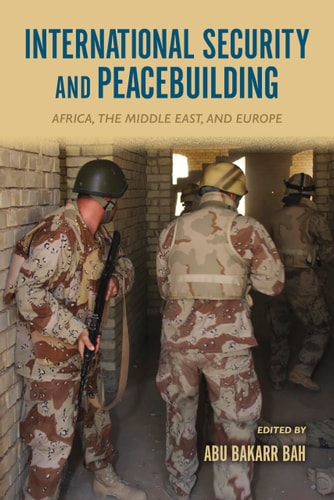
International Security and Peacebuilding: Africa, the Middle East, and Europe
0
0
As an Amazon Associate and affiliate partner, Menrva Books earns from qualifying purchases. Learn more
Author Description
The end of the Cold War was to usher in an era of peace based on flourishing democracies and free market economies worldwide. Instead, new wars, including the war on terrorism, have threatened international, regional, and individual security and sparked a major refugee crisis. This volume of essays on international humanitarian interventions focuses on what interests are promoted through these interventions and how efforts to build liberal democracies are carried out in failing states. Focusing on Africa, the Middle East, and Europe, an international group of contributors shows that best practices of protection and international state-building have not been applied uniformly. Together the essays provide a theoretical and empirical critique of global liberal governance and, as they note challenges to regional and international cooperation, they reveal that global liberal governance may threaten fragile governments and endanger human security at all levels.
Menrva's Summary
THE THESIS
This volume critically examines the complexities and contradictions of international humanitarian interventions in the post-Cold War era. The essays explore how interventions, ostensibly aimed at promoting liberal democracies and state-building in failing states, often fall short of their goals, particularly in Africa, the Middle East, and Europe. Contributors analyze the uneven application of best practices in protection and state-building, revealing how global liberal governance can inadvertently threaten fragile governments and endanger human security. The collection offers a theoretical and empirical critique of current international governance models and highlights challenges to regional and international cooperation.
THE SCOPE MAP
- Analysis of international humanitarian interventions and their stated objectives.
- Focus on the implementation of liberal democracy and state-building in failing states.
- Case studies and theoretical critiques concerning Africa, the Middle East, and Europe.
- Examination of the uneven application of protection and state-building best practices.
- Critique of global liberal governance and its impact on human security.
- Discussion of challenges to regional and international cooperation in intervention efforts.
- Exploration of the interests promoted through international humanitarian interventions.
THE AUTHORITY PERSPECTIVE
The collection offers a critical perspective on international humanitarian interventions, questioning the effectiveness and equity of liberal governance models in post-conflict regions. Contributors highlight the disparities in applying protection and state-building strategies across Africa, the Middle East, and Europe. The essays collectively challenge the notion that interventions consistently foster peace and democracy, instead suggesting they can destabilize fragile governments and compromise human security. This work provides a nuanced, empirically grounded critique of contemporary global governance.
Page Count:
212
Publication Date:
2017-01-30
Publisher:
Indiana University Press
ISBN-10:
0253023769
ISBN-13:
9780253023766
History
Politics
Non-Fiction
Peacebuilding
Security Studies
Human security
International relations
Community Tags
Similar Books