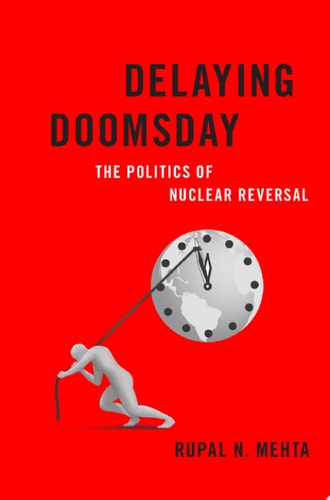
Delaying Doomsday: The Politics of Nuclear Reversal
0
0
As an Amazon Associate and affiliate partner, Menrva Books earns from qualifying purchases. Learn more
Author Description
In 1960, President Kennedy warned of a dangerous future, rife with nuclear-armed states and a widespread penchant for conflict by the end of the century. Thankfully, his prediction failed to pass; in fact, roughly three times as many countries have since opted to give up their nuclear pursuit or relinquish existing weapons than have maintained their arsenals. Nevertheless, clandestine acquisition of nuclear materials and technology by states such as Iraq, Syria, and Iran, and a nuclear North Korea, has reaffirmed the need for United States' commitment to pursuing aggressive counterproliferation strategies, particularly with rogue states.This book looks at the experiences of countries that ventured down the path of nuclear proliferation but were stopped short, and examines how the international community bargains with proliferators to encourage nuclear reversal. It asks why so many states have relented to pressure to abandon their nuclear weapons programs, and which counterproliferation policies have been successful. Rupal N. Mehta argues that the international community can persuade countries to reverse their weapons programs with rewards and sanctions especially when the threat to use military force remains "on the table". Specifically, nuclear reversal is most likely when states are threatened with sanctions and offered face-saving rewards that help them withstand domestic political opposition. Historically, the United States has relied on a variety of policy levers--including economic and civilian nuclear assistance and, sometimes, security guarantees, as well as economic sanctions--to achieve nuclear reversal. Underlying these negotiations is the possibility of military intervention, which incentivizes states to accept the agreement (often spearheaded by the United States) and end their nuclear pursuit.The book draws on interviews with current and former policymakers, as well as in-depth case studies of India, Iran, and North Korea, to provide policy recommendat
Menrva's Summary
THE THESIS
What conditions and policy instruments effectively compel states to abandon nuclear weapons programs? Rupal N. Mehta, an expert in international security, examines the historical record of nuclear reversal to determine why states choose to relinquish their nuclear ambitions. By analyzing the interplay between coercive threats, economic sanctions, and face-saving rewards, the author constructs a framework for understanding how the international community, led by the United States, successfully negotiates the cessation of nuclear proliferation.
THE SCOPE MAP
What You Will Find
- Analysis of counterproliferation strategies including economic sanctions, civilian nuclear assistance, and security guarantees.
- A theoretical framework emphasizing the necessity of credible military threats alongside diplomatic incentives.
- In-depth case studies of India, Iran, and North Korea.
- Primary source data derived from interviews with current and former policymakers.
Scope Limits
- The analysis focuses primarily on state-level actors and does not extensively cover non-state nuclear proliferation risks.
- The study prioritizes the U.S.-led diplomatic perspective over the internal decision-making processes of the proliferator states.
THE AUTHORITY PERSPECTIVE
Experts in international security identify this work as a significant contribution to the study of nuclear non-proliferation and coercive diplomacy. Readers frequently note the academic rigor of the case studies and the clarity with which the author connects historical data to contemporary policy challenges.
Page Count:
264
Publication Date:
2020-01-29
Publisher:
Oxford University Press
ISBN-10:
0190077972
ISBN-13:
9780190077976
History
Politics
Intelligence
Geopolitics
Nuclear Proliferation
Politics & Government
New Used & Rental Textbooks
International relations
Foreign Policy
Specific Topics
World politics
Security Studies
Community Tags
Other Editions(2)
Similar Books










Reader Comments
Share Your Thoughts
No comments yet. Be the first to share your thoughts!