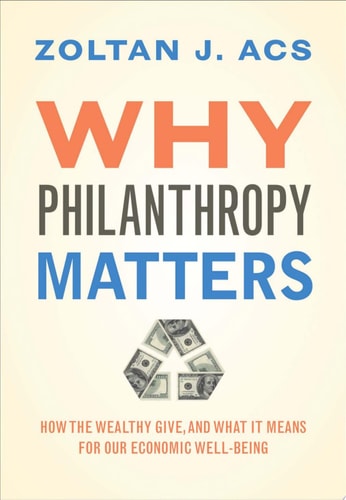
Why Philanthropy Matters: How the Wealthy Give, and What It Means for Our Economic Well-Being
0
0
As an Amazon Associate and affiliate partner, Menrva Books earns from qualifying purchases. Learn more
Author Description
The hidden role of philanthropy in enriching America's prosperity—and the world's Philanthropy has long been a distinctive feature of American culture, but its crucial role in the economic well-being of the nation—and the world—has remained largely unexplored. Why Philanthropy Matters takes an in-depth look at philanthropy as an underappreciated force in capitalism, measures its critical influence on the free-market system, and demonstrates how American philanthropy could serve as a model for the productive reinvestment of wealth in other countries. Factoring in philanthropic cycles that help balance the economy, Zoltan Acs offers a richer picture of capitalism, and a more accurate backdrop for considering policies that would promote the capitalist system for the good of all. Examining the dynamics of American-style capitalism since the eighteenth century, Acs argues that philanthropy achieves three critical outcomes. It deals with the question of what to do with wealth—keep it, tax it, or give it away. It complements government in creating public goods. And, by focusing on education, science, and medicine, philanthropy has a positive effect on economic growth and productivity. Acs describes how individuals such as Benjamin Franklin, Andrew Carnegie, Bill Gates, and Oprah Winfrey have used their wealth to establish institutions and promote knowledge, and Acs shows how philanthropy has given an edge to capitalism by promoting vital forces—like university research—necessary for technological innovation, economic equality, and economic security. Philanthropy also serves as a guide for countries with less flexible capitalist institutions, and Acs makes the case for a larger, global philanthropic culture. Providing a new perspective on the development of capitalism, Why Philanthropy Matters highlights philanthropy's critical links to the economic progress, health, and future of the United States—and beyond.
Menrva's Summary
THE THESIS
Philanthropy is a vital, yet underappreciated, force in capitalism that significantly contributes to economic well-being. The book examines philanthropy's crucial role in the American and global economies, measuring its influence on the free-market system and proposing it as a model for wealth reinvestment in other countries. It argues that philanthropy addresses what to do with wealth, complements government in creating public goods, and drives economic growth and productivity by focusing on education, science, and medicine. The work analyzes historical figures and their contributions, demonstrating how philanthropy fosters innovation, equality, and security, and advocates for a broader global philanthropic culture.
THE SCOPE MAP
- What to do with wealth: keep it, tax it, or give it away.
- Philanthropy's role in complementing government in creating public goods.
- The positive effect of philanthropy on economic growth and productivity through education, science, and medicine.
- Historical examples of philanthropists such as Benjamin Franklin, Andrew Carnegie, Bill Gates, and Oprah Winfrey.
- Philanthropy's contribution to technological innovation, economic equality, and economic security.
- Philanthropy as a model for countries with less flexible capitalist institutions.
- The case for a larger, global philanthropic culture.
THE AUTHORITY PERSPECTIVE
The book is presented as a new perspective on the development of capitalism, highlighting the critical links between philanthropy and economic progress, health, and the future of the United States and beyond. It aims to demonstrate how American philanthropy can serve as a model for productive wealth reinvestment globally. The work analyzes the dynamics of American-style capitalism since the eighteenth century, offering a richer picture of capitalism and a more accurate backdrop for policy considerations.
Page Count:
272
Publication Date:
2013-02-21
Publisher:
Princeton University Press
ISBN-10:
1400846811
ISBN-13:
9781400846818
Business
History
Economics
Non-Fiction
Philanthropy
Community Tags
Similar Books