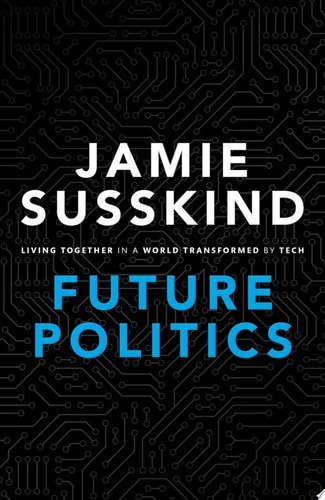
Future Politics
0
0
As an Amazon Associate and affiliate partner, Menrva Books earns from qualifying purchases. Learn more
Author Description
Politics In The Twentieth Century Was Dominated By A Single Question: How Much Of Our Collective Life Should Be Determined By The State, And What Should Be Left To The Market And Civil Society? Now The Debate Is Different: To What Extent Should Our Lives Be Directed And Controlled By Powerful Digital Systems - And On What Terms? Digital Technologies - From Artificial Intelligence To Blockchain, From Robotics To Virtual Reality - Are Transforming The Way We Live Together. Those Who Control The Most Powerful Technologies Are Increasingly Able To Control The Rest Of Us. As Time Goes On, These Powerful Entities - Usually Big Tech Firms And The State - Will Set The Limits Of Our Liberty, Decreeing What May Be Done And What Is Forbidden. Their Algorithms Will Determine Vital Questions Of Social Justice. In Their Hands, Democracy Will Flourish Or Decay. A Landmark Work Of Political Theory, Future Politics Challenges Readers To Rethink What It Means To Be Free Or Equal, What It Means To Have Power Or Property, And What It Means For A Political System To Be Just Or Democratic. In A Time Of Rapid And Relentless Changes, It Is A Book About How We Can - And Must - Regain Control. Winner Of The Estoril Global Issues Distinguished Book Prize.
Menrva's Summary
THE THESIS
This book investigates how the rise of powerful digital systems necessitates a fundamental re-evaluation of political concepts like liberty, equality, and democracy. Jamie Susskind, a barrister and former fellow at Cambridge, utilizes a framework of political theory to analyze how algorithms and emerging technologies shift power away from individuals toward the state and large technology corporations. He argues that without proactive intervention, these digital entities will increasingly dictate the boundaries of human agency and social justice.
THE SCOPE MAP
What You Will Find
- Analysis of the intersection between digital technologies like AI, blockchain, and robotics and traditional political structures.
- A re-examination of core political concepts including property, power, and justice in a digital age.
- Theoretical arguments regarding the erosion of individual autonomy by private and state-controlled digital systems.
Scope Limits
- The text does not provide a technical manual for software development or specific coding practices.
- It does not offer a comprehensive legislative roadmap for immediate policy implementation.
THE AUTHORITY PERSPECTIVE
Experts and critics recognize this work as a significant contribution to the field of political theory, noting its ability to bridge the gap between technological advancement and classical governance. Readers frequently highlight the density of the prose and the author's rigorous approach to defining the future of democratic institutions.
Page Count:
400
Publication Date:
2018-01-01
Publisher:
Oxford University Press
ISBN-10:
0192559494
ISBN-13:
9780192559494
Philosophy
Sociology
Digital Ethics
Technology
Government
Community Tags
Similar Books