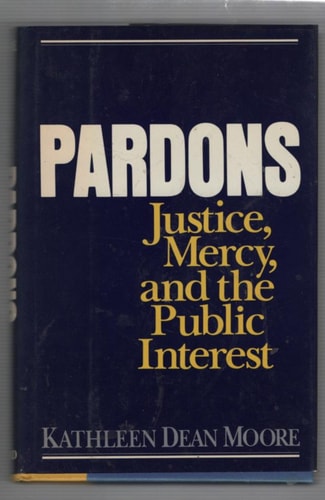
Pardons: Justice, Mercy, and the Public Interest
0
0
As an Amazon Associate and affiliate partner, Menrva Books earns from qualifying purchases. Learn more
Author Description
Controversy has surrounded the issue of pardons throughout its long history, from God's commuting Cain's banishment, to Pontius Pilate's release of Barabbas, to recent speculations that Oliver North would be pardoned. Pardoning practices in Europe from the fall of the Roman Empire to the Enlightenment varied drastically. The Norman kings, for example, readily granted pardons, while the philosophers of the Enlightenment argued vehemently against the practice. Montesquieu specifically stated that no pardoning power could exist in a democracy. Yet the Founding Fathers of this country granted the president an almost unlimited power to pardon, and, as a result, U.S. presidents have pardoned an average of one hundred fifty federal offenders every year since the beginning of this century.Appearing on the eve of the fifteenth anniversary of President Ford's pardon of Richard Nixon, Kathleen Dean Moore's timely and highly readable volume addresses many crucial questions surrounding acts of clemency, including what justifies pardoning power, who should be pardoned, and the definition of an unforgivable crime. Illustrating her arguments with rich and fascinating historical examples--some scandalous or funny, others inspiring or tragic--Moore examines the philosophy of pardons from King James II's practice of selling pardons for two shillings, through the debates of the Founding Fathers over pardoning power, to the Reagan Administration's record low number of pardons.Moore carefully analyzes the moral justification of pardons, discussing how to distinguish between justifiable, even morally obligatory, cases and unjustifiable abuses of clemency power. Viewing pardons as a means for correcting injustices, and not as arbitrary acts of grace, she argues in favor of pardons only to make amends for the punishment of an innocent person, or of a person who has committed a crime under mitigating or justifiable circumstances, or for anyone who has received an unfairly severe sentence.
Menrva's Summary
THE THESIS
This work investigates the moral, legal, and political justifications for the executive power of pardon within a democratic framework. Kathleen Dean Moore, a philosopher, examines the historical evolution of clemency from ancient practices to modern U.S. presidential usage. She argues that the power to pardon should not be an arbitrary act of grace, but rather a principled mechanism for correcting systemic injustices, mitigating overly harsh sentences, or addressing cases where the law fails to account for specific moral circumstances.
THE SCOPE MAP
What You Will Find
- Historical analysis of pardoning practices from the Roman Empire through the Enlightenment to the Reagan administration.
- A philosophical framework for distinguishing between justifiable clemency and political abuse.
- Case studies ranging from historical figures like King James II to the controversial pardon of Richard Nixon.
- An evaluation of the Founding Fathers' intent regarding the scope of presidential authority.
THE AUTHORITY PERSPECTIVE
Experts and legal scholars recognize this text as a significant philosophical inquiry into the intersection of executive power and moral justice. Readers frequently note that the prose remains accessible to non-specialists while providing a rigorous ethical analysis of a complex constitutional prerogative.
Page Count:
271
Publication Date:
1989-06-15
Publisher:
Oxford University Press
ISBN-10:
0195058712
ISBN-13:
9780195058710
History
Philosophy
Justice Administration of
Pardon
Law
Ethics
Government
Community Tags
Similar Books