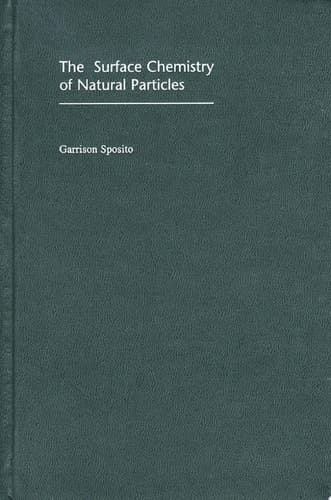
Author Description
This book is for one-semester or two-semester courses in the application of chemical methods to problems in the earth sciences. The first five chapters treat fundamental concepts of physical chemistry such as volume, energy, entropy, equilibrium, and rates. The above is an introduction to thermodynamic logic from a macroscopic and an atomic point of view. The remaining material deals with the most common types of chemical reactions encountered in the earth sciences. In these chapters, theories are first presented and then applied to particular geochemical problems. Special features include integration of theory and applications in the belief that understanding why a formula works is necessary to proper application of the formula, treatment of isotopic reactions and isotopic fractionations from a theoretical and practical point of view, and comparison of the behavior of aqueous solutions at elevated temperatures and pressures with the behavior at one atmosphere.
Menrva's Summary
THE THESIS
This text investigates the application of fundamental chemical principles and thermodynamic logic to solve complex problems within the earth and planetary sciences. Wallace Broecker, a distinguished geochemist, utilizes a dual-perspective approach that bridges macroscopic observations with atomic-level interactions. The book argues that a robust understanding of chemical formulas is contingent upon grasping the underlying physical chemistry, providing a structured framework for students to analyze geochemical reactions.
THE SCOPE MAP
What You Will Find
- Fundamental concepts including volume, energy, entropy, equilibrium, and reaction rates
- Theoretical and practical analysis of isotopic reactions and fractionations
- Comparative studies of aqueous solutions under standard atmospheric conditions versus elevated temperatures and pressures
Scope Limits
- The text is specifically tailored for one-semester or two-semester academic courses
- It does not provide an exhaustive survey of all geological phenomena, focusing instead on chemical methodology
THE AUTHORITY PERSPECTIVE
Academic reviewers and educators frequently cite this work as a foundational resource for students transitioning from general chemistry to specialized geochemical applications. The text is noted for its pedagogical balance, successfully integrating theoretical rigor with practical problem-solving techniques.
Page Count:
318
Publication Date:
1971-01-01
Publisher:
McGraw-Hill Book Company
ISBN-10:
0070079978
ISBN-13:
9780070079977
Thermodynamics
Geochemistry
Earth Science
Planetary Science
Physical Chemistry
Community Tags
Similar Books