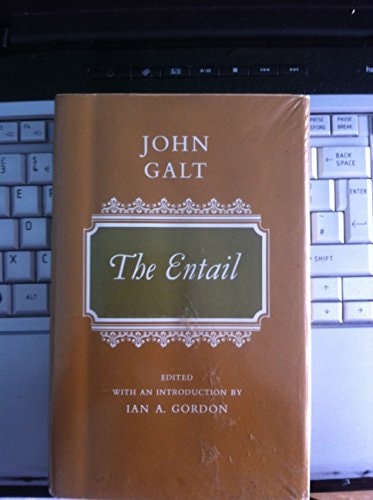
The Entail: Or, The Lairds of Grippy
0
0
As an Amazon Associate and affiliate partner, Menrva Books earns from qualifying purchases. Learn more
Author Description
Leopold Classic Library is delighted to publish this classic book as part of our extensive collection. As part of our on-going commitment to delivering value to the reader, we have also provided you with a link to a website, where you may download a digital version of this work for free. Many of the books in our collection have been out of print for decades, and therefore have not been accessible to the general public. Whilst the books in this collection have not been hand curated, an aim of our publishing program is to facilitate rapid access to this vast reservoir of literature. As a result of this book being first published many decades ago, it may have occasional imperfections. These imperfections may include poor picture quality, blurred or missing text. While some of these imperfections may have appeared in the original work, others may have resulted from the scanning process that has been applied. However, our view is that this is a significant literary work, which deserves to be brought back into print after many decades. While some publishers have applied optical character recognition (OCR), this approach has its own drawbacks, which include formatting errors, misspelt words, or the presence of inappropriate characters. Our philosophy has been guided by a desire to provide the reader with an experience that is as close as possible to ownership of the original work. We hope that you will enjoy this wonderful classic book, and that the occasional imperfection that it might contain will not detract from the experience.
Menrva's Summary
THE PULSE
The central conflict arises from the complex legal and personal ramifications of an entail, which dictates the inheritance of the Grippy estate and triggers a multi-generational struggle for wealth and status. The protagonist, Claud Walkinshaw, navigates the social and economic pressures of 18th-century Scotland as he attempts to secure his family's future through the rigid structures of property law. Opposing him are the shifting loyalties of his own kin and the unpredictable nature of the legal system, which often serves to dismantle the very stability it is intended to preserve. The narrative employs a third-person perspective to observe the decline and moral decay of the Walkinshaw family across several decades.
INSIDE THE PAGES
- Detailed examination of Scottish legal customs and the practice of entailment
- Satirical portrayal of social climbing and greed
- Multi-generational character development spanning several decades
- Realistic depiction of 18th-century Scottish rural and urban life
- Focus on the tension between individual ambition and family duty
- Use of regional dialect to establish setting and character authenticity
- Exploration of the psychological impact of inherited wealth
- Critical commentary on the rigidity of class structures
THE COLLECTIVE ECHO
Readers and critics frequently highlight the novel's sharp satirical edge and its meticulous observation of Scottish social dynamics during the period. Discussion often centers on Galt's ability to balance the technicalities of property law with the messy, often tragic realities of family life. Many observers note that the pacing reflects the slow, inevitable decline of the Walkinshaw estate, which serves as a central metaphor for the characters' moral failings. The work is often praised for its authentic voice and its refusal to romanticize the pursuit of status, making it a significant study of human avarice. Readers interested in the evolution of the novel form often find this text to be a compelling example of early 19th-century realism.
Page Count:
414
Publication Date:
1970-01-01
Publisher:
Oxford U.P
ISBN-10:
0192553348
ISBN-13:
9780192553348
Historical Fiction
Satire
Scottish literature
Classic fiction
Scotland
Family Saga
Community Tags
Similar Books