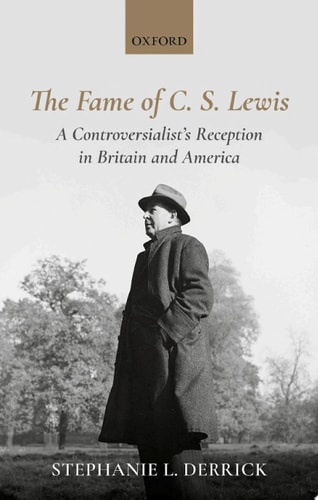
The Fame of C. S. Lewis: A Controversialist's Reception in Britain and America
0
0
As an Amazon Associate and affiliate partner, Menrva Books earns from qualifying purchases. Learn more
Author Description
Award-Winner in the Religion: Christianity category of the 2019 International Book AwardsC. S. Lewis, long renowned for his children's books as well as his Christian apologetics, has been the subject of wide interest since he first stepped-up to the BBC's microphone during the Second World War. Until now, however, the reasons why this medievalist began writing books for a popular audience, and why these books have continued to be so popular, had not been fully explored. In fact Lewis, who once described himself as by nature an 'extreme anarchist', was a critical controversialist in his time-and not to everyone's liking. Yet, somehow, Lewis's books directed at children and middlebrow Christians have continued to resonate in the decades since his death in 1963. Stephanie L. Derrick considers why this is the case, and why it is more true in America than in Lewis's home-country of Britain.The story of C. S. Lewis's fame is one that takes us from his childhood in Edwardian Belfast, to the height of international conflict during the 1940s, to the rapid expansion of the paperback market, and on to readers' experiences in the 1980s and 1990s, and, finally, to London in November 2013, where Lewis was honoured with a stone in Poet's Corner in Westminster Abbey. Derrick shows that, in fact, the author himself was only one actor among many shaping a multi-faceted image. The Fame of C. S. Lewis is the most comprehensive account of Lewis's popularity to date, drawing on a wealth of fresh material and with much to interest scholars and C. S. Lewis admirers alike.
Menrva's Summary
THE THESIS
This book investigates the complex factors behind the enduring and divergent popularity of C. S. Lewis in Britain and America. Stephanie L. Derrick, a scholar of modern religious history, utilizes archival research and publishing data to argue that Lewis's fame was not merely a product of his own writing, but a constructed image shaped by wartime media, the expansion of the paperback market, and specific cultural receptions in different nations. She examines how Lewis transitioned from a niche academic to a global cultural icon through his roles as a broadcaster and controversialist.
THE SCOPE MAP
What You Will Find
- Analysis of the post-war paperback market and its role in literary dissemination
- Historical examination of Lewis's BBC broadcasts and their impact on public perception
- Comparative study of British versus American reception of Lewis's apologetics and children's literature
- Documentation of Lewis's posthumous canonization and institutional recognition
Scope Limits
- Does not provide a comprehensive literary analysis of the thematic content within Lewis's fiction
- Does not focus on Lewis's private life or personal relationships outside of his public persona
THE AUTHORITY PERSPECTIVE
Experts recognize this work as a significant contribution to the study of twentieth-century literary reception and religious publishing history. Readers frequently note the academic rigor of the prose and the depth of the archival research presented throughout the text.
Page Count:
240
Publication Date:
2018-01-01
Publisher:
OUP Oxford
ISBN-10:
0192551523
ISBN-13:
9780192551528
History
Biography
English & College Success
Publishing History
Christianity
English
Biography Autobiography
Literary Criticism
Community Tags
Similar Books