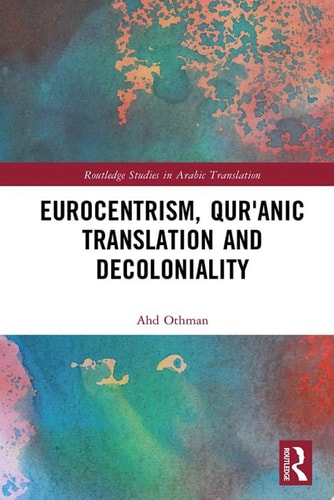
Eurocentrism, Qurʾanic Translation and Decoloniality
0
0
As an Amazon Associate and affiliate partner, Menrva Books earns from qualifying purchases. Learn more
Author Description
Eurocentrism, Qurʾanic Translation and Decoloniality contributes to the understanding of Eurocentrism in Translation Studies and engages with the concept through the lens of scholarship on Arabic and Qurʾan translation. This book calls for a deeper consideration of Eurocentrism as essential for several debates in the discipline, including its scientific character and future development. It claims that the angle of Arabic and Qurʾan translation is a valuable – and nearly unexploited – area where tensions in translation scholarship can play out in revealing ways. The book also draws connections between Eurocentrism, Qurʾan translation and decolonial thought in order to highlight ‘decoloniality’ as a useful framework for imagining a post-Eurocentric discipline. The book will appeal to scholars and postgraduate students and researchers interested in Translation Studies, particularly within the areas of Arabic, Qurʾanic, Islamic and religious translation.
Menrva's Summary
THE THESIS
This book investigates the pervasive influence of Eurocentrism within the field of Translation Studies, particularly as it pertains to the translation of the Qurʾan and Arabic texts. It argues that a critical examination of Eurocentrism is fundamental to understanding the discipline's scientific basis and future trajectory, proposing that the under-explored area of Arabic and Qurʾan translation offers a unique vantage point for these discussions. By connecting Eurocentrism, Qurʾan translation, and decolonial thought, the work advocates for 'decoloniality' as a vital framework for envisioning a post-Eurocentric future for translation scholarship.
THE SCOPE MAP
- Analysis of Eurocentrism within Translation Studies.
- Engagement with scholarship on Arabic and Qurʾan translation.
- Discussion of the scientific character and future development of Translation Studies.
- Exploration of Arabic and Qurʾan translation as a site of disciplinary tension.
- Connection between Eurocentrism, Qurʾan translation, and decolonial thought.
- Advocacy for 'decoloniality' as a framework for a post-Eurocentric discipline.
- Target audience: scholars, postgraduate students, and researchers in Translation Studies, Arabic, Islamic, and religious translation.
THE AUTHORITY PERSPECTIVE
The book is positioned to appeal to scholars and postgraduate students within Translation Studies, particularly those focusing on Arabic, Qurʾanic, Islamic, and religious translation. Its contribution lies in highlighting Eurocentrism as a critical lens for understanding ongoing debates in the discipline. The work suggests that the specific context of Arabic and Qurʾan translation provides a rich, yet underexplored, area for examining these tensions. By framing these discussions through decolonial thought, the book offers a pathway toward a more inclusive and post-Eurocentric academic landscape.
Page Count:
214
Publication Date:
2024-05-22
Publisher:
Taylor & Francis
ISBN-10:
1040018556
ISBN-13:
9781040018552
Literary Fiction
Non-Fiction
Islamic Studies
Translation Studies