
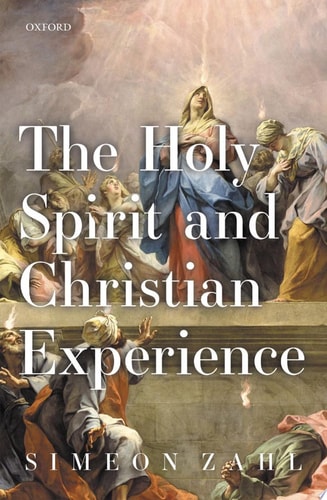
The Holy Spirit and Christian Experience
0
0
As an Amazon Associate and affiliate partner, Menrva Books earns from qualifying purchases. Learn more
Author Description
In The Holy Spirit and Christian Experience, Simeon Zahl presents a fresh vision for Christian theology that foregrounds the relationship between theological ideas and the experiences of Christians. He argues that theology is always operating in a vibrant landscape of feeling and desiring, and shows that contemporary theology has often operated in problematic isolation from these experiential dynamics. He then argues that a theologically serious doctrine of the Holy Spirit not only authorizes but requires attention to Christian experience. Against this background, Zahl outlines a new methodological approach to Christian theology that attends to the emotional and experiential power of theological ideas. This methodology draws on recent interdisciplinary work on affect and emotion, which has shown that affects are powerful motivating realities that saturate all dimensions of human thinking and acting. In the process, Zahl also explains why contemporary theology has often been ambivalent about subjective experience, and demonstrates that current discourse about God's activity in the world is often artificially abstracted from experience and embodiment. At the heart of the book, Zahl proposes a new account of the theology of grace from this experiential and pneumatological perspective. Focusing on the work of the Holy Spirit in salvation and sanctification, he retrieves insights from Augustine, Luther, and Philip Melanchthon to present an affective and Augustinian vision of salvation as a pedagogy of desire. In articulating this vision, Zahl engages critically with recent emphasis on participation and theosis in Christian soteriology, and charts a new path forward for Protestant theology in a landscape hitherto dominated by the theological visions of Barth and Aquinas.
Menrva's Summary
THE THESIS
How can Christian theology effectively integrate the role of the Holy Spirit with the lived emotional and affective experiences of believers? Simeon Zahl, a scholar of systematic theology, argues that contemporary theological discourse has become overly abstracted from human embodiment and desire. He proposes a new methodological framework that utilizes affect theory to re-examine the doctrine of grace, positioning the Holy Spirit as the primary agent in a pedagogy of desire that shapes the Christian life.
THE SCOPE MAP
What You Will Find
- An analysis of the historical and contemporary disconnect between academic theology and subjective religious experience.
- A methodological framework incorporating interdisciplinary research on affect and emotion into theological inquiry.
- A re-evaluation of soteriology and sanctification through the lens of Augustinian and Reformation-era thought.
Scope Limits
- The text does not provide a comprehensive survey of all global pneumatological traditions.
- It does not offer a practical guide for pastoral counseling or congregational ministry, focusing instead on systematic and methodological reform.
THE AUTHORITY PERSPECTIVE
Scholars and theologians recognize this work as a significant intervention in contemporary systematic theology, particularly for its attempt to bridge the gap between academic rigor and affective experience. Readers frequently note the density of the prose, which requires a strong background in historical theology and philosophical discourse to fully grasp the author's arguments.
Page Count:
271
Publication Date:
2020-01-01
Publisher:
OUP Oxford
ISBN-10:
0192562770
ISBN-13:
9780192562777
Religion
Affect Theory
Christianity
Theology
Pneumatology
Philosophy of
Theology doctrinal
Community Tags
Other Editions(4)


Similar Books




Reader Comments
Share Your Thoughts
No comments yet. Be the first to share your thoughts!