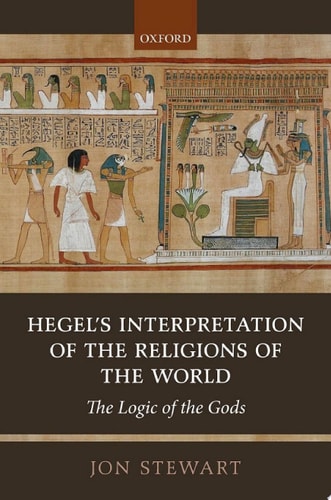
Hegel's Interpretation of the Religions of the World: The Logic of the Gods
0
0
As an Amazon Associate and affiliate partner, Menrva Books earns from qualifying purchases. Learn more
Author Description
In his Lectures on the Philosophy of Religion, Hegel treats the religions of the world under the rubric "the determinate religion." This is a part of his corpus that has traditionally been neglected since scholars have struggled to understand what philosophical work it is supposed to do. In Hegel's Interpretation of the Religions of the World, Jon Stewart argues that Hegel's rich analyses of Buddhism, Hinduism, Zoroastrianism, Judaism, Egyptian and Greek polytheism, and the Roman religion are not simply irrelevant historical material, as is often thought. Instead, they play a central role in Hegel's argument for what he regards as the truth of Christianity. Hegel believes that the different conceptions of the gods in the world religions are reflections of individual peoples at specific periods in history. These conceptions might at first glance appear random and chaotic, but there is, Hegel claims, a discernible logic in them. Simultaneously, a theory of mythology, history, and philosophical anthropology, Hegel's account of the world religions goes far beyond the field of philosophy of religion. The controversial issues surrounding his treatment of the non-European religions are still very much with us today and make his account of religion an issue of continued topicality in the academic landscape of the twenty-first century.
Menrva's Summary
THE THESIS
This book investigates the philosophical function and logical structure of Hegel's analysis of world religions within his broader system of thought. Jon Stewart, a scholar specializing in 19th-century German philosophy, examines the neglected sections of Hegel's Lectures on the Philosophy of Religion. He argues that these historical analyses are not mere appendages but are essential components of Hegel's argument for the truth of Christianity, reflecting a sophisticated theory of history and philosophical anthropology.
THE SCOPE MAP
What You Will Find
- A detailed examination of Hegel's treatment of Buddhism, Hinduism, Zoroastrianism, Judaism, Egyptian polytheism, Greek polytheism, and Roman religion.
- An analysis of the logical progression Hegel assigns to these disparate religious systems.
- A discussion of the intersection between mythology, history, and philosophical anthropology in Hegel's work.
Scope Limits
- The text does not provide a general introduction to Hegel's entire philosophical system.
- It does not offer a comprehensive critique of modern theology outside of the Hegelian framework.
THE AUTHORITY PERSPECTIVE
Experts recognize this work as a significant contribution to Hegelian scholarship, particularly for its effort to rehabilitate the status of Hegel's religious lectures. Readers frequently note the academic density of the prose, which is intended for advanced students and scholars of continental philosophy.
Page Count:
341
Publication Date:
2018-01-01
Publisher:
OUP Oxford
ISBN-10:
0192564943
ISBN-13:
9780192564948
Religion
Philosophy
Religion
Philosophy history
Community Tags
Similar Books