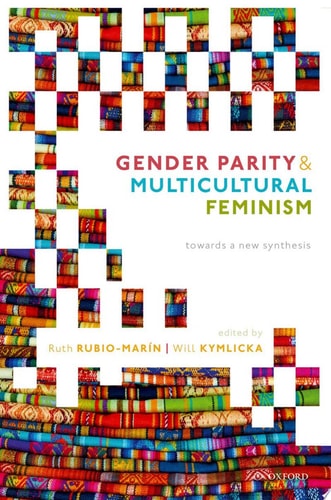
Gender Parity and Multicultural Feminism
0
0
As an Amazon Associate and affiliate partner, Menrva Books earns from qualifying purchases. Learn more
Author Description
Around The World, We See A 'participatory Turn' In The Pursuit Of Gender Equality, Exemplified By The Adoption Of Gender Quotas In National Legislatures To Promote Women's Role As Decision-makers. We Also See A 'pluralism Turn', With Increasing Legal Recognition Given To The Customary Law Or Religious Law Of Minority Groups And Indigenous Peoples. To Date, The Former Trend Has Primarily Benefitted Majority Women, And The Latter Has Primarily Benefitted Minority Men. Neither Has Effectively Ensured The Participation Of Minority Women. In Response, Multicultural Feminists Have Proposed Institutional Innovations To Strengthen The Voice Of Minority Women, Both At The State Level And In Decisions About The Interpretation And Evolution Of Cultural And Religious Practices. This Volume Explores The Connection Between Gender Parity And Multicultural Feminism, Both At The Level Of Theory And In Practice. The Authors Explore A Range Of Cases From Europe, Latin America, The Middle East, And Africa, In Relation To State Law, Customary Law, Religious Law, And Indigenous Law. While Many Obstacles Remain, And Many Women Continue To Suffer From The Paradox Of Multicultural Vulnerability, These Innovations In Theory And Practice Offer New Prospects For Reconciling Gender Equality And Pluralism.
Menrva's Summary
THE THESIS
This volume investigates the intersection of gender parity and multiculturalism to determine how institutional innovations can better secure the participation of minority women within diverse legal frameworks.
Authored by legal and political scholars Ruth Rubio-Marin and Will Kymlicka, the text examines the tension between the 'participatory turn' toward gender quotas and the 'pluralism turn' toward recognizing minority customary or religious laws. The authors argue that current legal structures often fail to protect minority women, who are frequently marginalized by both majority-focused gender policies and patriarchal minority traditions. The book provides a theoretical and practical framework for reconciling these competing interests through specific institutional reforms.
THE SCOPE MAP
What You Will Find
- Comparative analysis of gender quotas in national legislatures across Europe, Latin America, the Middle East, and Africa.
- Theoretical exploration of the 'paradox of multicultural vulnerability' regarding minority women.
- Case studies involving the interaction between state law, customary law, religious law, and indigenous law.
Scope Limits
- The analysis does not provide a universal policy blueprint, as it focuses on context-specific institutional adaptations.
- The text does not cover private sector gender parity initiatives, focusing primarily on state and community-level legal structures.
THE AUTHORITY PERSPECTIVE
Experts identify this work as a critical contribution to the discourse on intersectional political representation and minority rights. Readers frequently note the academic density of the prose, which is intended for scholars and policy practitioners engaged in human rights and legal reform.
Page Count:
304
Publication Date:
2018-01-01
Publisher:
Oxford University Press
ISBN-10:
0192565117
ISBN-13:
9780192565112
Law
Feminism
Human rights
Sociology
Community Tags
Similar Books