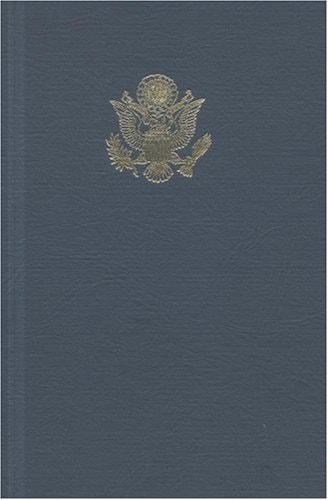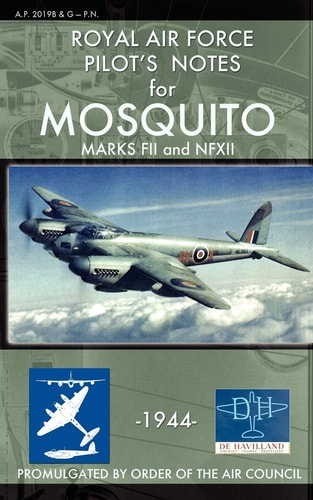
Royal Air Force Pilot's Notes for Mosquito Marks Fii and Nfxii
0
0
As an Amazon Associate and affiliate partner, Menrva Books earns from qualifying purchases. Learn more
Author Description
When Britain's brilliant aircraft designer Geoffrey de Havilland first proposed the Mosquito, the Air Ministry greeted the idea with skepticism. Powered by twin Merlin engines, the bomber would be constructed almost entirely of wood and handle like a fighter. Stripped of heavy defensive weapons and armor, its advantage was its light weight and high speed, which would allow it to escape pursuing enemy aircraft. De Havilland's critics were silenced when the prototype flew in November of 1940. The plane quickly proved itself one of the fastest and most versatile military aircraft in existence, and production of the type commenced immediately. The "Wooden Wonder" (or "Mossie" as it was sometimes referred to) entered widespread service in 1942 and flew as a fast bomber, fighter-bomber, night fighter, path-finder, maritime strike aircraft, and fast photo-reconnaissance aircraft. The plane became particularly famous for set-piece attacks including a raid on Gestapo HQ in Oslo, an attack on a power station in Holland, and Amiens Prison. It also participated in the Normandy Campaign and D-Day. Created by the R.A.F., these notes were standard issue circa 1944. They contain fascinating information about aircraft operation, handling, and emergencies.
Menrva's Summary
THE THESIS
The de Havilland Mosquito, a revolutionary aircraft constructed primarily of wood, faced initial skepticism from the Air Ministry due to its unconventional design and reliance on speed over armament. Powered by twin Merlin engines and designed to handle like a fighter, its advantage lay in its light weight and high speed, enabling it to outmaneuver enemy aircraft. The prototype's successful flight in November 1940 silenced critics, proving the Mosquito to be one of the fastest and most versatile military aircraft of its time. These official Royal Air Force pilot's notes, dating from approximately 1944, provide essential operational guidance for the Mosquito Marks F.II and N.F.XII variants.
THE SCOPE MAP
- Detailed operational procedures for Mosquito Marks F.II and N.F.XII.
- Guidance on aircraft handling characteristics and performance envelopes.
- Information on emergency procedures and troubleshooting.
- Technical specifications and limitations of the aircraft.
- Insights into the aircraft's role and capabilities during World War II.
- Official documentation for RAF pilots serving in the mid-1940s.
THE AUTHORITY PERSPECTIVE
These pilot's notes offer a direct look into the operational realities of flying the iconic de Havilland Mosquito during World War II. The content provides technical details and procedural information that would have been critical for aircrew. The historical context of the Mosquito's development and its varied wartime roles, as described in the publisher's notes, highlights its significance. This document serves as a primary source for understanding the practical application of this remarkable aircraft.
Page Count:
52
Publication Date:
2012-05-01
Publisher:
Periscope Film, LLC
ISBN-10:
1937684814
ISBN-13:
9781937684815
History
Non-Fiction
Technical Manuals
Aviation
Military History
Community Tags
Similar Books