Elements of a Sustainable World
0
0
As an Amazon Associate and affiliate partner, Menrva Books earns from qualifying purchases. Learn more
Author Description
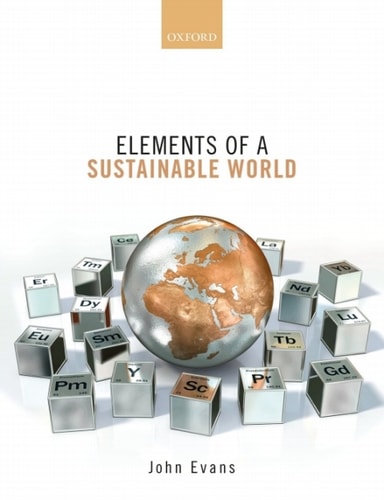
We have 118 known chemical elements as our palette in our context of sustaining our world. Our context is considered in terms of the four spheres of the ancient world: Earth, Air, Fire and Water. This book shows how chemical principles can be used to understand the pressures on our world, spanning from greenhouse emissions through freshwater supplies to energy generation and storage. The supply of the chemical elements is key to their contribution to alleviating these pressures. Most synthetic and radioactive elements are not available in sufficient supply to contribute in this. Some solutions, such as wind turbines, batteries, fuel cells and automotive exhaust remediation pose questions about sustainable supplies of critical elements. With an eye on the target of the IPCC of capping the temperature anomaly to 1.5 oC (RCP2.6), options for carbon capture and storage, and the generation of energy and element supply from the sea are assessed. The consequences of the escape of plastics and pharmaceuticals into the wider environment for water integrity are also considered. This book is designed around providing a one semester course for students who have entered at least the second level of university chemistry. It provides explanations and entries to current environmental issues. For students of environmental science, it provides an understanding of the chemical principles underpinning the causes and possible solutions to these issues. Each chapter has a set appropriate study questions. A study guide is available for the book.
Menrva's Summary
THE THESIS
How can the fundamental properties and availability of chemical elements be leveraged to address global sustainability challenges and climate targets? John G. Evans, drawing on his expertise in chemical principles, examines the intersection of material science and environmental preservation. The text utilizes the framework of the four classical spheres—Earth, Air, Fire, and Water—to categorize the pressures facing the modern world. By analyzing the supply constraints of specific elements, the author provides a rigorous basis for evaluating current technological solutions to climate change.
THE SCOPE MAP
What You Will Find
- Analysis of chemical element availability in the context of renewable energy technologies like wind turbines and fuel cells.
- Assessment of carbon capture and storage strategies relative to IPCC temperature goals.
- Examination of environmental impacts from plastics and pharmaceuticals on water integrity.
- Pedagogical study questions designed for university-level chemistry and environmental science curricula.
Scope Limits
- The text focuses primarily on the chemical and material aspects of sustainability rather than the socio-political or economic dimensions of climate policy.
- It assumes a foundational knowledge of chemistry, excluding introductory concepts for non-science students.
THE AUTHORITY PERSPECTIVE
Educators and students in the field of environmental chemistry identify this work as a structured resource for connecting theoretical chemical principles to real-world environmental pressures. The text is noted for its academic density and its specific focus on the material limitations inherent in sustainable technology development.
Page Count:
336
Publication Date:
2020-01-01
Publisher:
OUP Oxford
ISBN-10:
0192562886
ISBN-13:
9780192562883
Climate Change
Chemistry
Earth Sciences
Sustainability
Natural Resources
Community Tags
Similar Books