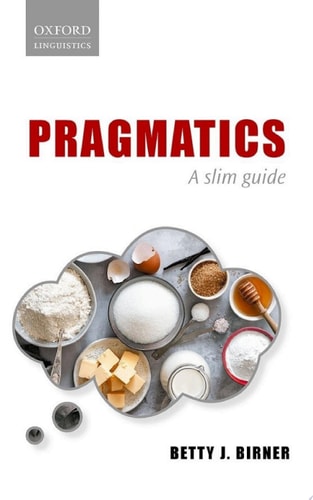
Pragmatics: A Slim Guide
0
0
As an Amazon Associate and affiliate partner, Menrva Books earns from qualifying purchases. Learn more
Author Description
This book offers a concise but comprehensive entry-level guide to the study of meaning in context. There can be a big difference between what a speaker says and what they mean - i.e. between literal meaning and intended meaning. A speaker who says I need coffee can mean anything from 'Please buy more coffee' to 'I'm really sleepy'. How is a hearer to know? In this book, Betty Birner explores how we get from what is said to what is meant, from the perspective of both the speaker and the hearer, dealing with a range of context-dependent issues in language along the way: literal and non-literal meaning, implicature, speech acts, reference, definiteness, presupposition, and information structure. She reveals how language users can infer each other's meanings using not just what is being said but also the context and an assumption of rationality and cooperation. This slim guide summarizes the most important and foundational theories in the field of linguistic pragmatics, illustrated with plenty of real-life examples, and including a helpful glossary of key terms. Written in a lively and accessible style, the book will appeal to a wide range of readers, from undergraduate and graduate students of pragmatics to general readers interested in how we successfully communicate with one another.
Menrva's Summary
THE THESIS
This book investigates the mechanisms by which language users bridge the gap between literal utterance and intended meaning through the study of pragmatics. Betty J. Birner, a specialist in linguistics, utilizes foundational theories and real-world examples to explain how context, rationality, and cooperation allow speakers and hearers to successfully communicate. The text provides a structured framework for understanding the nuances of human interaction beyond simple semantics.
THE SCOPE MAP
What You Will Find
- Core theories of implicature, speech acts, and presupposition
- Analysis of information structure and reference
- Practical examples of context-dependent meaning
- A comprehensive glossary of linguistic terminology
Scope Limits
- Does not provide an exhaustive history of linguistic philosophy
- Does not cover advanced computational linguistics or machine learning applications
THE AUTHORITY PERSPECTIVE
Experts and students alike recognize this text as a highly accessible entry point into the field of pragmatics. Readers frequently note that the prose remains clear and engaging despite the technical nature of the subject matter.
Page Count:
192
Publication Date:
2021-01-01
Publisher:
OUP Oxford
ISBN-10:
0192563696
ISBN-13:
9780192563699
English & College Success
Academic
Linguistics
Language
Reference
Communication
English
Community Tags
Similar Books