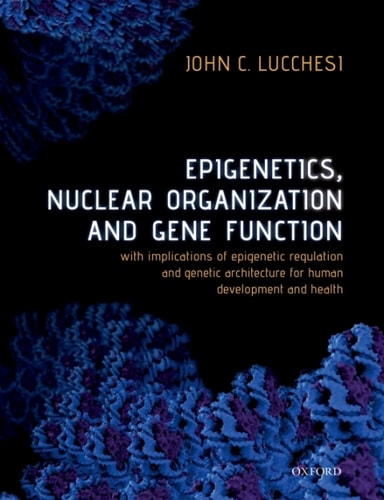
Epigenetics, Nuclear Organization & Gene Function: With implications of epigenetic regulation and genetic architecture for human development and health
0
0
As an Amazon Associate and affiliate partner, Menrva Books earns from qualifying purchases. Learn more
Author Description
Epigenetics is the study of heritable changes in gene function that do not involve changes in the DNA sequence. These changes, consisting principally of DNA methylation, histone modifications, and non-coding RNAs, maintain or modulate the initial impact of regulatory factors that recognize and associate with particular genomic sequences. Epigenetic modifications are manifest in all aspects of normal cellular differentiation and function, but they can also have damaging effects that result in pathologies such as cancer. Research is continuously uncovering the role of epigenetics in a variety of human disorders, providing new avenues for therapeutic interventions and advances in regenerative medicine. This book's primary goal is to establish a framework that can be used to understand the basis of epigenetic regulation and to appreciate both its derivation from genetics and interdependence with genetic mechanisms. A further aim is to highlight the role played by the three-dimensional organization of the genetic material itself (the complex of DNA, histones and non-histone proteins referred to as chromatin), and its distribution within a functionally compartmentalized nucleus. This architectural organization of the genome plays a major role in the subsequent retrieval, interpretation, and execution of both genetic and epigenetic information.
Menrva's Summary
THE THESIS
This text investigates the complex interplay between epigenetic regulation, nuclear architecture, and their collective influence on gene function and human health. Author John C. Lucchesi, a specialist in genetics, synthesizes current research on DNA methylation, histone modifications, and non-coding RNAs to establish a cohesive framework. The book argues that understanding gene expression requires moving beyond linear DNA sequences to account for the three-dimensional organization of chromatin within the nucleus.
THE SCOPE MAP
What You Will Find
- Mechanisms of DNA methylation and histone modification
- Analysis of non-coding RNAs in gene regulation
- Examination of nuclear compartmentalization and chromatin structure
- Discussion of epigenetic contributions to pathologies like cancer
Scope Limits
- Does not provide a comprehensive clinical manual for specific disease treatments
- Does not cover the entirety of developmental biology outside of epigenetic influence
THE AUTHORITY PERSPECTIVE
Experts recognize this work as a structured synthesis of the relationship between genetic architecture and epigenetic control. Readers frequently note the academic density of the prose, which is intended for students and researchers in the biological sciences.
Page Count:
304
Publication Date:
2018-01-01
Publisher:
OUP Oxford
ISBN-10:
0192567160
ISBN-13:
9780192567161
Science
Medicine
Biology
Epigenetics
Genetics
Community Tags
Similar Books