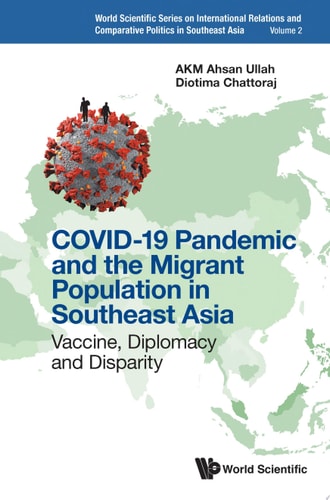
COVID-19 Pandemic and the Migrant Population in Southeast Asia: Vaccine, Diplomacy and Disparity
0
0
As an Amazon Associate and affiliate partner, Menrva Books earns from qualifying purchases. Learn more
Author Description
The COVID-19 pandemic has impacted about 1 billion migrants (both international and domestic) in a variety of ways, and this book demonstrates how COVID-19 has widened the gaps between citizens, non-migrant and migrant populations in terms of income, job retention, freedom of movement, vaccine etc.While there is an emerging literature studying the impacts of COVID-19 on migration, the situation in Southeast Asia has not received much scholarly attention. This book fills the literature gap by studying the experiences of migrants and citizens in Brunei, Malaysia and Singapore and highlighting how the pandemic has exacerbated inequalities between and within the groups. These three countries are studied due to their high reliance of migrants in key economic sectors. Findings in this volume are derived from a qualitative approach, complemented by secondary data sources.This book is appropriate for undergraduate and postgraduate students of population studies, epidemiology, political science, public policy and administration, international relations, anthropology, psychology, sociology, and migration and refugee studies. Migration and labour scholars benefit from the nuanced comprehension about how a pandemic could cause a schism between migrants and the population at large. Policymakers may consider the proposed recommendations in the book to improve the migration situation.
Menrva's Summary
THE THESIS
The COVID-19 pandemic has exacerbated existing disparities, particularly impacting migrant populations in Southeast Asia. This book examines how the pandemic has widened income, job retention, and freedom of movement gaps between citizens and migrant populations, with a specific focus on vaccine access. It addresses a gap in scholarly literature by analyzing the experiences of migrants and citizens in Brunei, Malaysia, and Singapore, countries heavily reliant on migrant labor. The research utilizes a qualitative approach supported by secondary data sources to highlight the pandemic's role in deepening inequalities.
THE SCOPE MAP
- Analysis of the impact of COVID-19 on approximately 1 billion migrants globally.
- Focus on the specific context of Southeast Asia, examining Brunei, Malaysia, and Singapore.
- Exploration of disparities in income, job retention, freedom of movement, and vaccine access.
- Highlighting how the pandemic widened gaps between citizens, non-migrant, and migrant populations.
- Utilizes a qualitative research approach.
- Complemented by secondary data sources.
- Recommendations for policymakers to improve migration situations.
THE AUTHORITY PERSPECTIVE
This volume is designed to fill a noted gap in scholarly attention regarding the impact of COVID-19 on migrant populations in Southeast Asia. The research methodology, combining qualitative approaches with secondary data, aims to provide a nuanced understanding of the exacerbated inequalities experienced by migrants in Brunei, Malaysia, and Singapore. The book is positioned as a valuable resource for students and scholars across various disciplines, including population studies, public policy, international relations, and sociology. Policymakers are also identified as a key audience, with the expectation that the book's findings and recommendations will inform future policy decisions.
Page Count:
364
Publication Date:
2022-10-21
Publisher:
World Scientific
ISBN-10:
9811253668
ISBN-13:
9789811253669
Politics
Non-Fiction
Health
Public Policy
Epidemiology
Migration Studies
Sociology
Community Tags
Similar Books