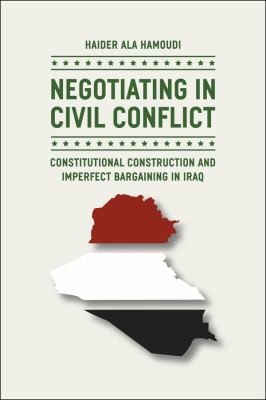
Negotiating in Civil Conflict: Constitutional Construction and Imperfect Bargaining in Iraq
0
0
As an Amazon Associate and affiliate partner, Menrva Books earns from qualifying purchases. Learn more
Author Description
In 2005, Iraq drafted its first constitution and held the country’s first democratic election in more than fifty years. Even under ideal conditions, drafting a constitution can be a prolonged process marked by contentious debate, and conditions in Iraq are far from ideal: Iraq has long been racked by ethnic and sectarian conflict, which intensified following the American invasion and continues today. This severe division, which often erupted into violence, would not seem to bode well for the fate of democracy. So how is it that Iraq was able to surmount its sectarianism to draft a constitution that speaks to the conflicting and largely incompatible ideological view of the Sunnis, Shi’ah, and Kurds? Haider Ala Hamoudi served in 2009 as an adviser to Iraq’s Constitutional Review Committee, and he argues here that the terms of the Iraqi Constitution are sufficiently capacious to be interpreted in a variety of ways, allowing it to appeal to the country’s three main sects despite their deep disagreements. While some say that this ambiguity avoids the challenging compromises that ultimately must be made if the state is to survive, Hamoudi maintains that to force these compromises on issues of central importance to ethnic and sectarian identity would almost certainly result in the imposition of one group’s views on the others. Drawing on the original negotiating documents, he shows that this feature of the Constitution was not an act of evasion, as is sometimes thought, but a mark of its drafters’ awareness in recognizing the need to permit the groups the time necessary to develop their own methods of working with one another over time.
Menrva's Summary
THE THESIS
This book investigates how Iraq, amidst severe ethnic and sectarian conflict following the American invasion, managed to draft a constitution that could accommodate the deeply divergent views of its Sunni, Shi'ah, and Kurdish populations.
THE SCOPE MAP
- Analysis of the 2005 Iraqi Constitution drafting process.
- Examination of the role of ethnic and sectarian conflict in constitutional construction.
- Discussion of imperfect bargaining and the strategic use of ambiguity in the constitution.
- Insights from original negotiating documents and the author's advisory role.
- Argument that constitutional ambiguity was a deliberate strategy to allow for future reconciliation rather than evasion.
THE AUTHORITY PERSPECTIVE
The book is regarded as a significant contribution to understanding constitutionalism in deeply divided societies. It is noted for its detailed analysis of the Iraqi constitutional process, drawing on primary sources and the author's direct experience. The work is praised for its nuanced argument that the constitution's perceived ambiguity was a strategic choice to foster long-term stability. This perspective challenges common interpretations that viewed such ambiguity as a failure to compromise.
Page Count:
280
Publication Date:
2013-11-12
Publisher:
University of Chicago Press
ISBN-10:
0226315347
ISBN-13:
9780226315348
Politics
History
Non-Fiction
Law
Community Tags
Similar Books