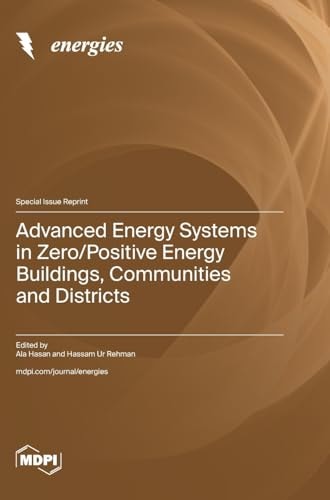
Advanced Energy Systems in Zero/Positive Energy Buildings, Communities and Districts
0
0
As an Amazon Associate and affiliate partner, Menrva Books earns from qualifying purchases. Learn more
Author Description
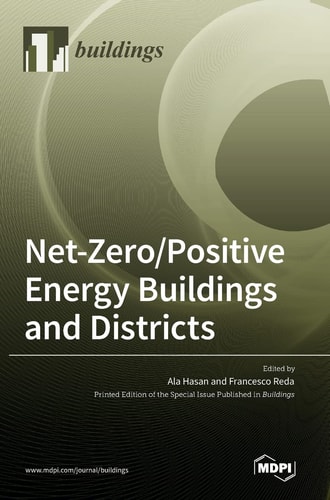
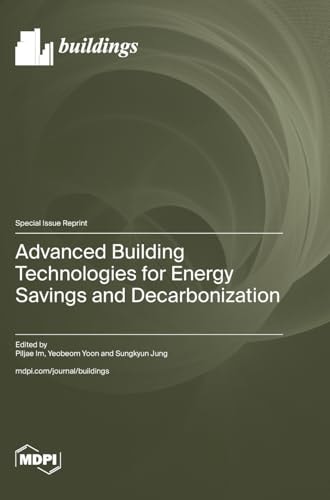
This reprint focuses on the concepts, fundamentals, and definitions of the concept of nearly/net/zero, positive energy buildings/communities/districts, and their impact on built communities. It also provides details on the energy efficiency of buildings in communities and districts, the HVAC systems, short and long term energy storages, and renewable energy integration and controls. Built environments and businesses are moving towards energy efficiency, flexibility, and self-sufficiency, and this is discussed in detail. In addition to this, while looking at the present energy crises situation resulting from economic crises, climate change, and policy changes, the concept of energy resilience is also discussed. The development of future-proof buildings and built environments are of particular interest. Finally, the economical, social, and policy-related aspects are included in the reprint in order to provide solutions for various interested stakeholders, parties, and, in general, to society.
Menrva's Summary
THE THESIS
This reprint investigates the foundational concepts and practical applications of nearly/net/zero and positive energy buildings, communities, and districts. It details energy efficiency measures, HVAC systems, short and long-term energy storage solutions, and the integration of renewable energy sources within these built environments. The work addresses the growing global imperative for energy efficiency, flexibility, and self-sufficiency, particularly in light of current energy crises, climate change, and evolving policies, emphasizing the development of future-proof structures and communities. Furthermore, it incorporates crucial economical, social, and policy-related aspects to offer comprehensive solutions for diverse stakeholders and society at large.
THE SCOPE MAP
- Concepts, fundamentals, and definitions of zero/positive energy buildings, communities, and districts.
- Energy efficiency strategies for buildings within communities and districts.
- Analysis of HVAC systems in the context of energy-efficient buildings.
- Detailed examination of short-term and long-term energy storage solutions.
- Integration of renewable energy sources and control mechanisms.
- Discussion on the impact of built environments and businesses moving towards energy efficiency, flexibility, and self-sufficiency.
- Exploration of energy resilience in response to economic crises, climate change, and policy shifts.
- Consideration of economical, social, and policy-related aspects for stakeholders and society.
THE AUTHORITY PERSPECTIVE
This reprint appears to offer a comprehensive technical overview of advanced energy systems within the context of sustainable building practices. Its scope covers fundamental concepts, detailed system analyses, and broader societal implications, suggesting it is aimed at professionals and researchers in the fields of architecture, engineering, and urban planning. The inclusion of economic, social, and policy factors indicates a holistic approach to addressing the challenges and opportunities in creating energy-efficient and resilient built environments.
Page Count:
310
Publication Date:
2024-04-11
Publisher:
MDPI AG
ISBN-10:
3725807051
ISBN-13:
9783725807055
Science & Technology
Non-Fiction
Sustainable architecture
Building Science
Energy Efficiency
urban planning
Community Tags
Similar Books