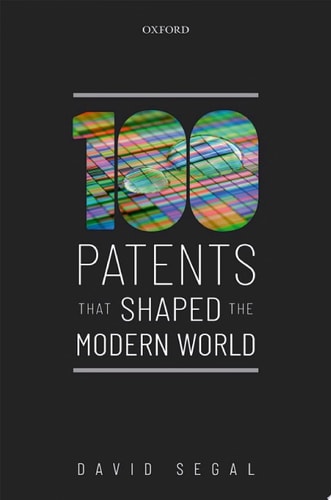
One Hundred Patents That Shaped the Modern World
0
0
As an Amazon Associate and affiliate partner, Menrva Books earns from qualifying purchases. Learn more
Author Description
What would our world today be like without inventions like tarmac, aspirin, liquid crystals, and barbed wire? This guide shows how patents and the inventions they describe have shaped the 21st century. It gives us insights into the inventions, big and small, that have had huge impacts, many unexpected, on multiple spheres of our lives, from popular culture and entertainment, to global health, to transportation, to the waging of war. It features patent documents that date from the mid-19th century to the present. Patent documents describe inventions and represent an accurate and rich source of information about the history and current state of modern technology, as patents are examined and their accuracy can be challenged. The subject matter covers many technical areas. Patents discussed include, for example, Morse code, the diode, triode, transistors, television, frozen foods, ring-pull for soft drink cans, board games such as Monopoly, gene editing, metamaterials, MRI, computerised tomography, insulin, and monoclonal antibodies such as Herceptin. The text is illustrated with drawings adapted from the original patent documents. Patent numbers are included to allow interested readers to trace the documents. Inventions described in the patents are placed in historical perspective. For example, the book discusses the role of the cavity magnetron and radar in World War II, and the influence of the diode on the development of broadcasting at the beginning of the 20th century.
Menrva's Summary
THE THESIS
This book investigates how specific patent documents have functioned as foundational blueprints for the technological and cultural advancements of the modern era. Author David Segal utilizes a curated selection of patent filings to demonstrate the intersection of legal protection and innovation. By analyzing the technical specifications and historical context of these documents, the text argues that patents serve as an accurate, verifiable record of human progress across diverse fields such as medicine, warfare, and consumer goods.
THE SCOPE MAP
What You Will Find
- A chronological analysis of 100 significant patent documents ranging from the mid-19th century to the present.
- Technical explanations of inventions including transistors, MRI technology, and gene editing.
- Historical context linking specific patents to global events like World War II.
- Reproductions of drawings adapted from original patent filings.
Scope Limits
- The text does not provide a comprehensive legal analysis of patent law or intellectual property litigation.
- It does not cover every major invention in history, focusing instead on those with traceable patent documentation.
THE AUTHORITY PERSPECTIVE
Readers frequently note the accessibility of the technical descriptions, which bridge the gap between complex engineering and general history. Experts highlight this as a useful reference for those interested in the intersection of industrial history and primary source documentation.
Page Count:
240
Publication Date:
2019-01-01
Publisher:
OUP Oxford
ISBN-10:
0192571141
ISBN-13:
9780192571144
Science
History
Technology
Invention
Inventions
Patents
Trades & Technology
Reference
Community Tags
Other Editions(3)


Similar Books