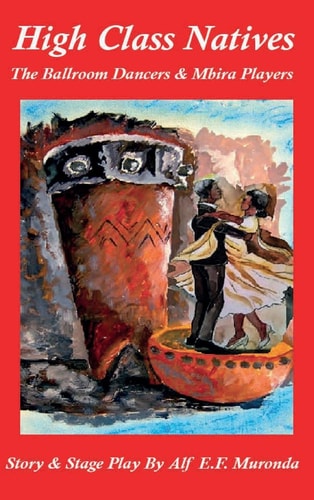
High Class Natives: The Ballroom Dancers & Mbira Players
0
0
As an Amazon Associate and affiliate partner, Menrva Books earns from qualifying purchases. Learn more
Author Description
"High Class Natives - The Ballroom Dancers and the Mbira Players" is a musical stage play. Set in late 1970s Rhodesia, "High Class Natives" explores the tumultuous clash of cultures within the Choto family, encapsulated in the fight for identity amid racial oppression and political turmoil. Living in Beatrice Cottages, an enclave of relative prosperity within the African township of Salisbury, the family grapples with the impact of war, colonial legacy, and their divergent futures. In the story, the recently widowed Choto family patriarch, Majasi, finds himself living in Beatrice Cottages at the home of his oldest son, Rwizi. His village home was burnt to the ground by the Rhodesian Army forces in Mhondoro African Reservation after they had killed his old wife as punishment for her having obliged some guerrilla fighters who were passing through, who had brought some meat with them that they needed cooked for a meal. When the story begins, we hear, in a private conversation between Rwizi and his wife in their bedroom, Rwizi's wife, Sally, makes it clear to her husband that she has no intention of accommodating his father nor his young brother in their house any longer than she must, and it is only to help him out with his relatives. She justifies her inhospitality on the premise that Rwizi's family's presence in their home is going to be disruptive to her aim to raise their6 year old son, John, to be a European cultured person. Rwizi finds himself in a hard place torn between his obligation to his father and to his wife. Rwizi owes his father a lot. It was his father who sold most of their family's small cattle herd to pay for his higher education which enabled him to land the management job in the Revenue Department of the City of Salisbury. It was also his father who loaned him the money for the down payment on the Beatrice Cottages house they live in. Not only does Rwizi love his father and brother wholeheartedly but according to
Menrva's Summary
THE PULSE
A family's struggle for identity and survival ignites amidst the political and cultural upheaval of 1970s Rhodesia. The Choto family, residing in the relative comfort of Beatrice Cottages in Salisbury's African township, finds their lives fractured by war and the lingering effects of colonial rule. Patriarch Majasi, having lost his wife and home to the Rhodesian Army, seeks refuge with his son Rwizi, but his presence, along with that of his younger brother, creates friction with Rwizi's wife, Sally, who is determined to raise their son with European sensibilities. Rwizi is caught between his deep filial obligations and his wife's aspirations, a conflict that mirrors the larger societal divisions tearing the nation apart.
INSIDE THE PAGES
- Exploration of the clash between traditional African culture and European colonial influence.
- The impact of the Rhodesian Bush War on civilian families and their daily lives.
- Internal family conflict stemming from differing views on cultural assimilation and future aspirations.
- The protagonist Rwizi's dilemma between loyalty to his father and his wife's desires.
- Setting of Beatrice Cottages as a microcosm of societal tensions within Salisbury.
- Themes of identity, displacement, and the search for belonging.
- The narrative framework is that of a stage play, suggesting dialogue-driven scenes and character interactions.
THE COLLECTIVE ECHO
The play appears to delve into the complex social dynamics and political realities of Rhodesia during a period of intense conflict. The premise suggests a narrative rich in character-driven conflict, exploring themes of cultural identity and familial obligation against a backdrop of historical turmoil. The focus on the Choto family's internal struggles, particularly Rwizi's position between his father and wife, likely forms the core of the dramatic tension. The setting and historical context point to a story that engages with the broader socio-political landscape of the era, offering a nuanced perspective on the human cost of war and oppression.
Page Count:
172
Publication Date:
2025-01-10
Publisher:
Usa-Ingramspark
ISBN-10:
1965398030
ISBN-13:
9781965398036
Historical Fiction
Literary Fiction
Drama
Fiction
African