Superior Women: Medieval Female Authority in Poitiers' Abbey of Sainte-Croix
0
0
As an Amazon Associate and affiliate partner, Menrva Books earns from qualifying purchases. Learn more
Author Description
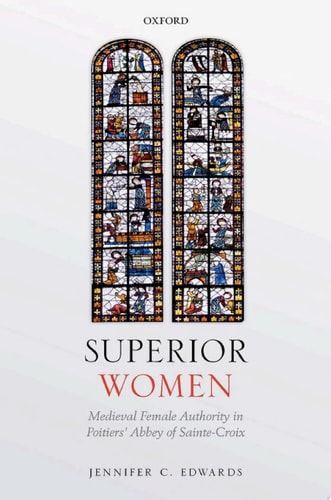
Superior Women examines the claims of abbesses of the abbey of Sainte-Croix in medieval Poitiers to authority from the abbey's foundation to its 1520 reform. These women claimed to hold authority over their own community, over dependent chapters of male canons, and over extensive properties in Poitou; male officials such as the king of France and the pope repeatedly supported these claims. To secure this support, the abbesses relied on two strategies that the abbey's founder, the sixth-century Saint Radegund, established: they documented support from a network of allies made up of powerful secular and ecclesiastical officials, and they used artefacts left from Radegund's life to shape her cult and win new patrons and allies. Abbesses across the 900 years of this study routinely turned to these strategies successfully when faced with conflict from dependents, or more local officials such as the bishop of Poitiers. Sainte-Croix's nuns proved adept at tailoring these strategies to shifting historical contexts, turning from Frankish bishops to the kings of Frankia, then to the Pope and finally to the King of France as former allies became unavailable to them. The book demonstrates respectful cooperation between men and monastic women, and more extensive respect for female monastic authority than scholars typically recognize. Chapters focus on the cult's manuscripts, church decoration, procession, jurisdictions between cult institutions, reform, and rebellion.
Menrva's Summary
THE THESIS
This book investigates how the abbesses of Sainte-Croix in medieval Poitiers maintained and asserted institutional authority over a period of nine centuries. Jennifer C. Edwards, a scholar of medieval history, utilizes archival records, hagiographic manuscripts, and material culture to argue that these women successfully navigated complex power structures by leveraging the legacy of their founder, Saint Radegund. The study demonstrates that these abbesses strategically cultivated alliances with secular and ecclesiastical elites to protect their jurisdiction and property rights.
THE SCOPE MAP
What You Will Find
- An analysis of the cult of Saint Radegund as a political and administrative tool.
- Examination of jurisdictional disputes between the abbey and local male officials.
- A study of the evolution of monastic patronage from the sixth century to the 1520 reform.
- Evidence derived from manuscripts, church decoration, and administrative records.
Scope Limits
- The study focuses specifically on the abbey of Sainte-Croix and does not provide a comprehensive survey of all medieval female monastic houses.
- The analysis concludes at the 1520 reform and does not cover the subsequent history of the abbey.
THE AUTHORITY PERSPECTIVE
Scholars recognize this work as a significant contribution to the study of female monastic agency and the intersection of gender and power in the Middle Ages. Experts frequently highlight the author's ability to challenge traditional narratives regarding the limitations placed on medieval women in positions of authority.
Page Count:
329
Publication Date:
2019-01-01
Publisher:
OUP Oxford
ISBN-10:
0192574981
ISBN-13:
9780192574985
History
Monasticism
Religious History
Womens History
Power Social sciences
European History
Community Tags
Similar Books