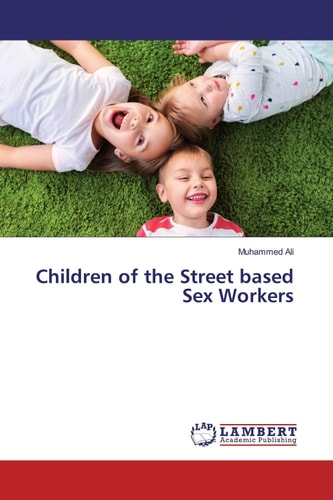
Children of the Street based Sex Workers
0
0
As an Amazon Associate and affiliate partner, Menrva Books earns from qualifying purchases. Learn more
Author Description
Almost 100 percent of the surveyed female children are working as sex workers and they don’t live mostly in any permanent places. Most of the children of the SBSW squatter with their mother in small huts live in train stations, bus stations and on the streets. The CSBSW are often brought up by their relatives like-grandmothers, aunts, etc. The children say that they never stay with their father or his place. The Street-based sex workers want to live with their children but they prefer to give away their children to relatives as they have a financial crisis and to avoid the possible discrimination of their children from society. The husband of their mother is not the father of the child; the child is either of a former husband or of a client. 63% of the children, Group 2, of Sex workers living alone and remaining surveyed CSBSW are living with the female friends or husbands/wives and on the other hand, 69% of the surveyed CSBSW of Group 1 lives with their mother in the care of the mother. The CSBSW has hardly enjoyed pure drinking water and hygiene sanitation systems and most of the time they eat from the street or roadside vane.
Menrva's Summary
THE THESIS
This study investigates the dire living conditions and social circumstances of children born to street-based sex workers (SBSW). The research highlights that nearly all surveyed female children are engaged in sex work and lack stable housing, often living in squalor in train stations, bus stations, or on the streets. These children are frequently raised by relatives due to the financial crises and societal discrimination faced by their mothers, who themselves are often former husbands' or clients' children. The study details the living arrangements, with a significant portion of children living alone or with friends, while others reside with their mothers, and notes the pervasive lack of access to clean water, sanitation, and adequate food.
THE SCOPE MAP
- Analysis of living conditions for children of street-based sex workers.
- Data on housing stability and common living locations (streets, stations).
- Examination of childcare arrangements, including reliance on relatives.
- Discussion of financial crises and societal discrimination impacting mothers.
- Details on children's living situations: alone, with friends, or with mothers.
- Assessment of access to basic amenities like drinking water and sanitation.
- Information on food sources, often from street vendors.
THE AUTHORITY PERSPECTIVE
This book presents a stark examination of the social and economic factors affecting children of street-based sex workers. The research details their precarious living conditions, including lack of stable housing, inadequate sanitation, and reliance on informal food sources. It highlights the complex reasons mothers place their children with relatives, driven by financial hardship and the desire to shield them from societal stigma. The study provides a critical look at the systemic issues contributing to the vulnerability of this population.
Page Count:
60
Publication Date:
2019-09-29
Publisher:
LAP LAMBERT Academic Publishing
ISBN-10:
613996881X
ISBN-13:
9786139968817
True Crime
Non-Fiction
Child Welfare
Social Issues
Sociology
Human rights
Poverty
Community Tags
Similar Books