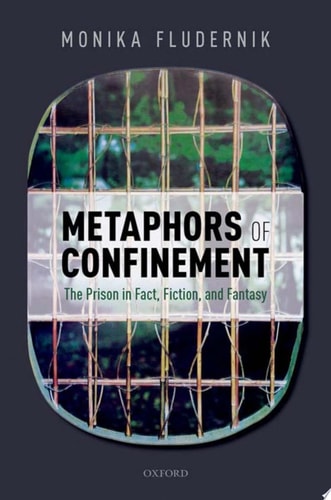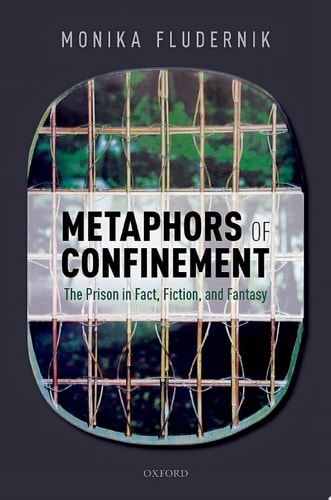
Metaphors of Confinement: The Prison in Fact, Fiction, and Fantasy
0
0
As an Amazon Associate and affiliate partner, Menrva Books earns from qualifying purchases. Learn more
Author Description
Metaphors of Confinement: The Prison in Fact, Fiction, and Fantasy offers a historical survey of imaginings of the prison as expressed in carceral metaphors in a range of texts about imprisonment from Antiquity to the present as well as non-penal situations described as confining or restrictive. These imaginings coalesce into a 'carceral imaginary' that determines the way we think about prisons, just as social debates about punishment and criminals feed into the way carceral imaginary develops over time. Examining not only English-language prose fiction but also poetry and drama from the Middle Ages to postcolonial, particularly African, literature, the book juxtaposes literary and non-literary contexts and contrasts fictional and nonfictional representations of (im)prison(ment) and discussions about the prison as institution and experiential reality. It comments on present-day trends of punitivity and foregrounds the ethical dimensions of penal punishment. The main argument concerns the continuity of carceral metaphors through the centuries despite historical developments that included major shifts in policy (such as the invention of the penitentiary). The study looks at selected carceral metaphors, often from two complementary perspectives, such as the home as prison or the prison as home, or the factory as prison and the prison as factory. The case studies present particularly relevant genres and texts that employ these metaphors, often from a historical perspective that analyses development through different periods.
Menrva's Summary
THE THESIS
This work investigates the historical continuity and evolution of the 'carceral imaginary' by examining how metaphors of confinement persist across diverse literary and non-literary texts from Antiquity to the present. Monika Fludernik, a scholar of English literature and narratology, utilizes a comparative framework to analyze how societal debates regarding punishment and criminality shape the linguistic and conceptual representations of imprisonment. The study argues that despite significant shifts in penal policy, such as the emergence of the penitentiary, the underlying metaphorical structures used to describe confinement remain remarkably stable over time.
THE SCOPE MAP
What You Will Find
- A historical survey of carceral metaphors spanning from the Middle Ages to contemporary postcolonial literature.
- Comparative analysis of complementary metaphorical pairings, such as the home as prison and the factory as prison.
- Examination of both fictional prose, poetry, and drama alongside non-literary institutional and experiential accounts.
Scope Limits
- The study focuses primarily on English-language texts and specific postcolonial, particularly African, literary examples.
- It does not provide a comprehensive global history of penal institutions, focusing instead on the conceptual and metaphorical representations of confinement.
THE AUTHORITY PERSPECTIVE
Scholars in the field of law and literature recognize this text as a rigorous interdisciplinary study that effectively bridges the gap between institutional history and literary theory. Readers frequently note the academic density of the prose, which serves as a foundational resource for those analyzing the ethical and cultural dimensions of punishment.
Page Count:
840
Publication Date:
2019-01-01
Publisher:
OUP Oxford
ISBN-10:
0192577611
ISBN-13:
9780192577610
Literary Criticism
Sociology of Punishment
Literature
Criminology
English
Law and literature
History of Ideas
English & College Success