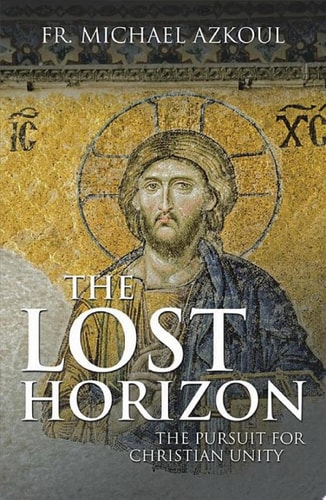
The Lost Horizon: The Pursuit for Christian Unity
0
0
As an Amazon Associate and affiliate partner, Menrva Books earns from qualifying purchases. Learn more
Author Description
To repeat, as it has been repeated many times before, Christian unity is possible only when all those who call themselves Christian embrace common doctrine bearing common definitions. Thus far, there has been only one church that has not changed its beliefsthe Eastern Orthodox Church. She should be the apex of unity. That is not the direction in which the ecumenical movement is moving; therefore, unaware of its ecclesial need, the ecumenical movement has lost its horizon. Father Michael
Menrva's Summary
THE THESIS
The pursuit of Christian unity is contingent upon adherence to a common doctrine with shared definitions, a standard exemplified by the Eastern Orthodox Church. The author posits that the Eastern Orthodox Church, having maintained its doctrinal integrity, should serve as the focal point for ecumenical efforts. However, the contemporary ecumenical movement is diverging from this path, leading the author to conclude that it has lost its guiding principle and thus its horizon. This work critically examines the trajectory of the ecumenical movement in light of historical and theological considerations.
THE SCOPE MAP
- An examination of the historical development of Christian doctrine.
- A theological argument for the Eastern Orthodox Church as the model for Christian unity.
- A critique of the modern ecumenical movement's direction and its perceived loss of focus.
- Discussion on the necessity of common definitions in theological discourse.
THE AUTHORITY PERSPECTIVE
The author, Father Michael Azkoul, presents a strong theological argument rooted in his extensive knowledge of Eastern Orthodox tradition. The book's premise centers on the idea that true Christian unity can only be achieved through a unified doctrinal stance, with the Eastern Orthodox Church as the historical and theological benchmark. This perspective offers a critical lens through which to view the broader ecumenical movement, suggesting a deviation from its foundational principles. The work is likely to resonate with those seeking a deeper understanding of Orthodox ecclesiology and its implications for interdenominational dialogue.
Page Count:
104
Publication Date:
2017-08-23
Publisher:
Xlibris Corporation
ISBN-10:
1543446280
ISBN-13:
9781543446289
Religion
Non-Fiction
Christianity
Theology
Church History
Community Tags
Similar Books