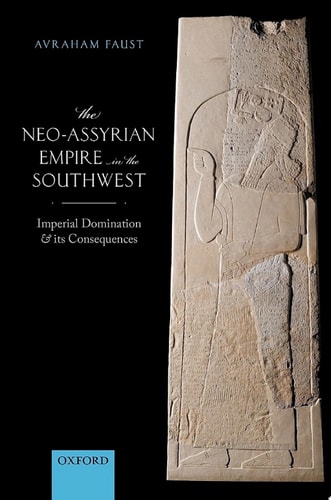
The Neo-Assyrian Empire in the Southwest: Imperial Domination and its Consequences
0
0
As an Amazon Associate and affiliate partner, Menrva Books earns from qualifying purchases. Learn more
Author Description
The Neo-Assyrian empire -- the first large empire of the ancient world -- has attracted a great deal of public attention ever since the spectacular discoveries of its impressive remains in the 19th century. The southwestern part of this empire, located in the lands of the Bible, is archaeologically speaking the best known region in the world, and its history is described in a plethora of texts, including the Hebrew Bible. Using a bottom-up approach, Avraham Faust utilises this unparalleled information to reconstruct the outcomes of the Assyrian conquest of the region and how it impacted the diverse political units and ecological zones that comprised it. In doing so, he draws close attention to the transformations the imperial take-over brought in its wake. His analysis reveals the marginality of the annexed territories in the southwest as the empire focused its activities in small border areas facing its prospering clients. A comparison of this surprising picture to the information available from other parts of the empire suggests that the distance of these provinces from the imperial core is responsible for their fate. This sheds new light on factors influencing imperial expansion, the considerations leading to annexation, and the imperial methods of control, challenging old conventions about the development of the Assyrian empire and its rule. Faust also examines the Assyrian empire within the broader context of ancient Near Eastern imperialism to answer larger questions on the nature of Assyrian domination, the reasons for its harsh treatment of the distant provinces, and the factors influencing the limits of its reach. His findings highlight the historical development of imperial control in antiquity and the ways in which later empires were able to overcome similar limitations, paving the way to much larger and longer-lasting polities.
Menrva's Summary
THE THESIS
This work investigates the mechanisms of Neo-Assyrian imperial control in the southwestern provinces and the factors that dictated the limits of their expansion. Avraham Faust, an archaeologist specializing in the ancient Near East, employs a bottom-up analytical framework to synthesize archaeological data and textual evidence from the Hebrew Bible. He argues that the marginal status of these southwestern territories was a direct consequence of their distance from the imperial core, which fundamentally shaped Assyrian administrative and military strategies.
THE SCOPE MAP
What You Will Find
- Analysis of the socio-political and ecological transformations in the Levant under Assyrian rule.
- A comparative study of imperial administrative methods across different provincial zones.
- Theoretical models regarding the constraints of ancient imperial expansion and control.
Scope Limits
- The study focuses primarily on the southwestern periphery rather than the central Assyrian heartland.
- It does not provide a comprehensive military history of every campaign, focusing instead on the long-term consequences of annexation.
THE AUTHORITY PERSPECTIVE
Scholars recognize this text as a significant contribution to the study of ancient imperialism, particularly for its innovative use of archaeological data to challenge traditional historical narratives. Readers frequently note the academic density of the prose, which makes it a specialized resource for students and researchers of Near Eastern history.
Page Count:
387
Publication Date:
2021-01-01
Publisher:
OUP Oxford
ISBN-10:
0192578723
ISBN-13:
9780192578723
History
Religion
Archaeology
Near East
Asia history
Assyrian Empire
Imperialism
Community Tags
Similar Books