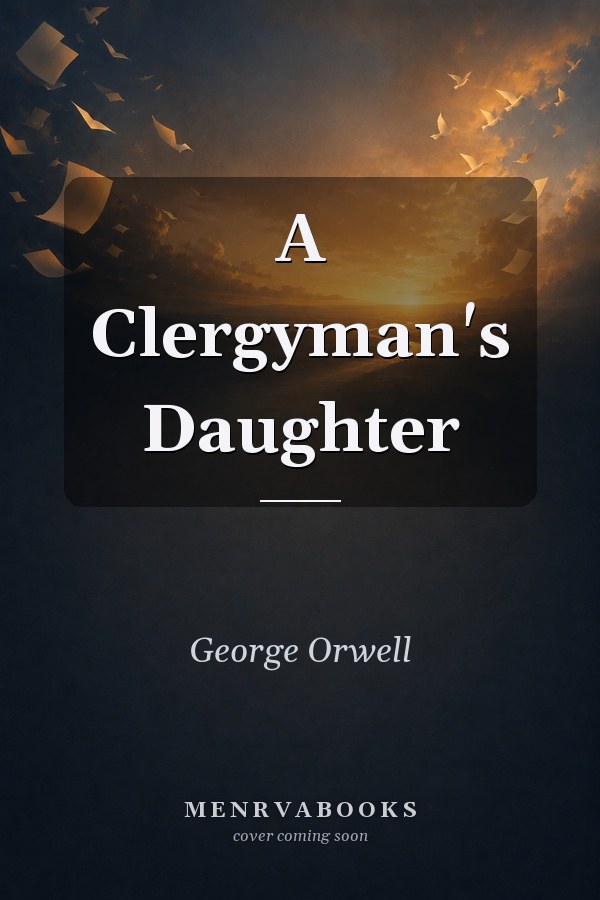
A Clergyman's Daughter
0
0
As an Amazon Associate and affiliate partner, Menrva Books earns from qualifying purchases. Learn more
Author Description
'the Face Was Quite Unfamiliar To Her, And Yet Not Strange. She Had Not Known Till This Moment What Face To Expect'. A Clergyman's Daughter Is George Orwell's Least Well-known, Most Unappreciated Novel. Drawing On His Experiences As A Hop-picker, Teacher, And Urban Vagrant, It Tells The Peculiar Story Of Dorothy Hare, The Daughter Of The Rector Of St Athelstan's In The Fictional Town Of Knype Hill. Unacknowledged By Her Absent-minded Father And Gossiped About By His Rheumatic Parishioners, Dorothy Is Suddenly And Traumatically Catapulted Into The Unknown. She Wakes Up In London, Her Memory Temporarily Gone; Travels To The Kentish Countryside; Spends A Night In Trafalgar Square; Works For The Authoritarian Schoolteacher Mrs Creevy; And Then Journeys Back To Her Old, Limited Life. A Novel About Loss And Return, A Clergyman's Daughter Charts The Course Of A Young Woman's Voyage Out And Circular Homecoming. In His Introduction To The Novel, Nathan Waddell Lays Out The Fantastical Elements And Socio-political Dimensions Of A Clergyman's Daughter And Examines How It Drew Inspiration From James Joyce's Epic Modernist Novel Ulysses, A Book Orwell Deeply Admired. About The Series: For Over 100 Years Oxford World's Classics Has Made Available The Widest Range Of Literature From Around The Globe. Each Affordable Volume Reflects Oxford's Commitment To Scholarship, Providing The Most Accurate Text Plus A Wealth Of Other Valuable Features, Including Expert Introductions By Leading Authorities, Helpful Notes To Clarify The Text, Up-to-date Bibliographies For Further Study, And Much More.
Menrva's Summary
THE PULSE
Dorothy Hare, the dutiful daughter of a rector, finds her rigid existence shattered when a sudden bout of amnesia forces her into the harsh realities of life outside her sheltered parish. Dorothy must navigate the unfamiliar streets of London and the grueling labor of the Kentish hop fields while struggling to reconstruct her fractured identity. Opposed by the indifference of her father and the exploitative nature of the figures she encounters, she faces physical deprivation and social ostracization. The narrative utilizes a third-person perspective to document her descent into poverty and her eventual, disillusioned return to the domestic sphere. The story emphasizes the stark contrast between the stifling expectations of the clergy and the raw, unvarnished struggle for survival in the urban landscape.
INSIDE THE PAGES
- Exploration of class dynamics in early 20th-century England
- Use of stream-of-consciousness techniques influenced by modernist traditions
- Detailed depictions of manual labor and vagrancy
- Critique of religious hypocrisy and social stagnation
- Non-linear progression of memory and identity
- Episodic structure reflecting the protagonist's displacement
- Satirical portrayal of small-town gossip and parochial life
- Examination of the limitations placed upon women in traditional roles
THE COLLECTIVE ECHO
Discussion often centers on the novel's experimental structure and its departure from the author's more famous political allegories. Readers frequently highlight the stark, unflinching realism used to describe the protagonist's time among the impoverished and the displaced. Critics often debate the effectiveness of the circular narrative, noting how it underscores the inescapable nature of Dorothy's social position. The work is frequently analyzed for its stylistic debt to modernist predecessors while maintaining a distinct focus on the material conditions of the working class. Many readers find the ending particularly provocative, as it avoids a traditional resolution in favor of a quiet, resigned return to the status quo.
Page Count:
320
Publication Date:
2021-01-01
Publisher:
Oxford University Press
ISBN-10:
019258779X
ISBN-13:
9780192587794
Fiction
Classic Literature
British literature
Social Realism
Modernist
Community Tags
Other Editions(9)






Similar Books



Reader Comments
Share Your Thoughts
No comments yet. Be the first to share your thoughts!